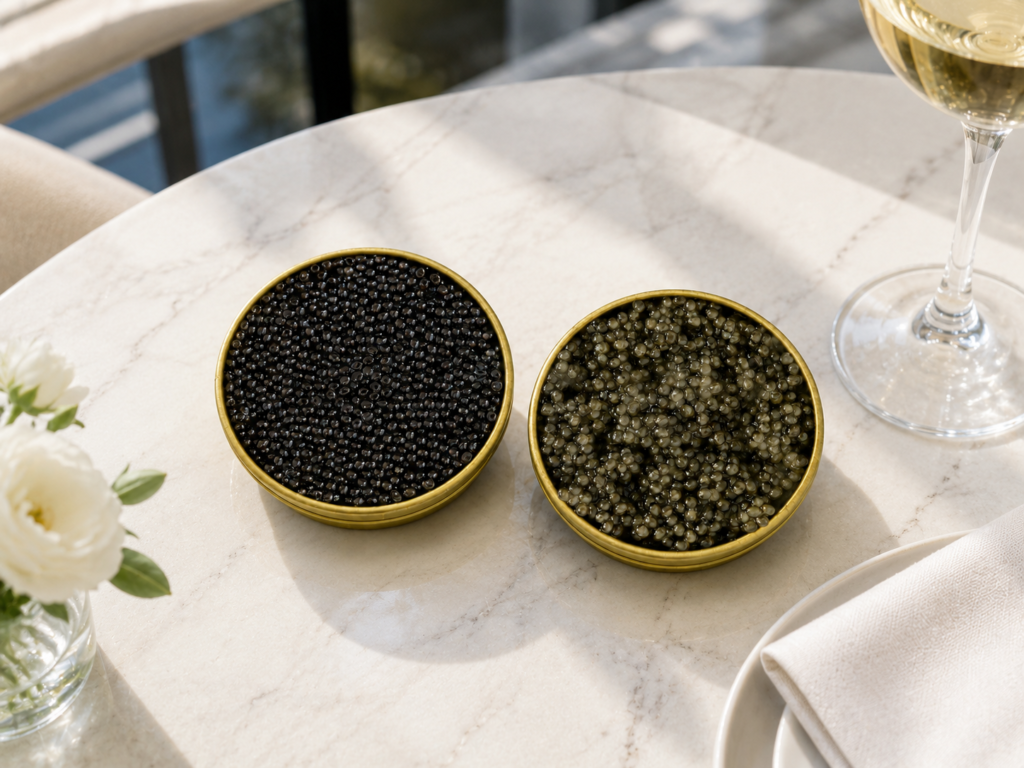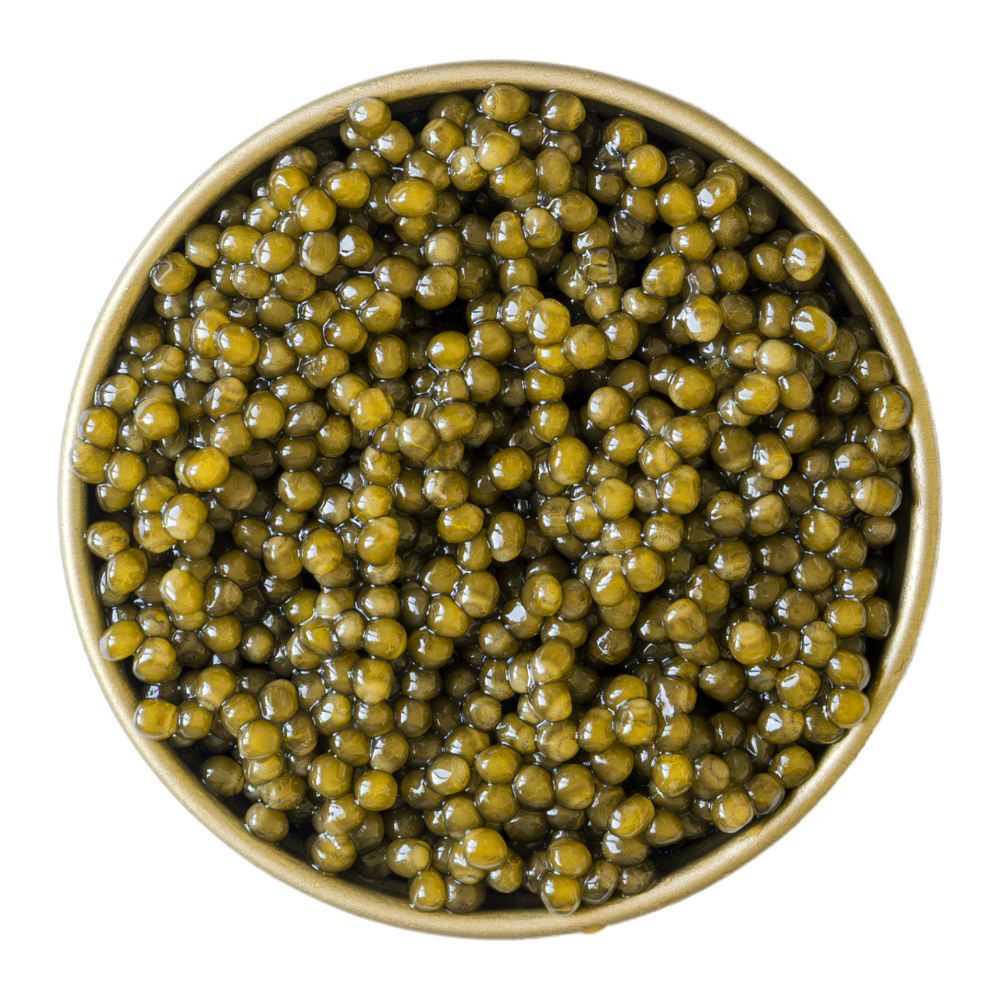
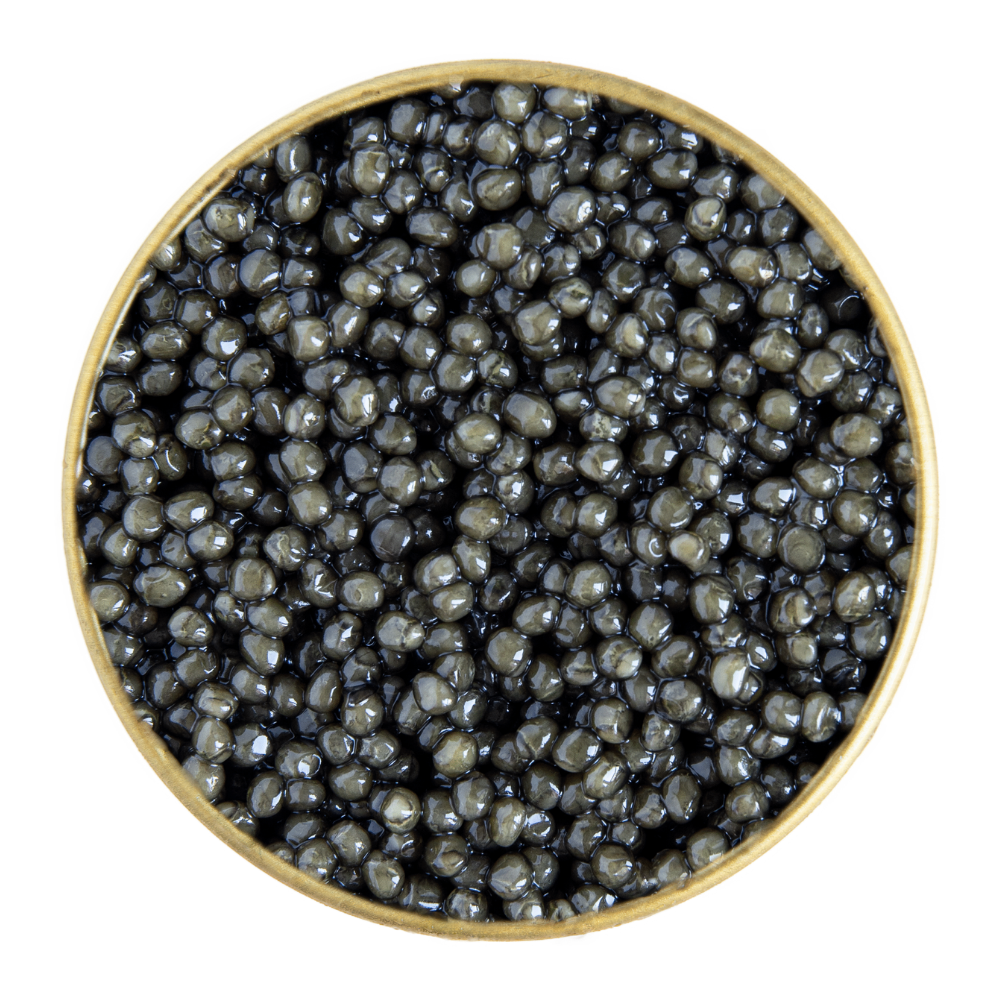
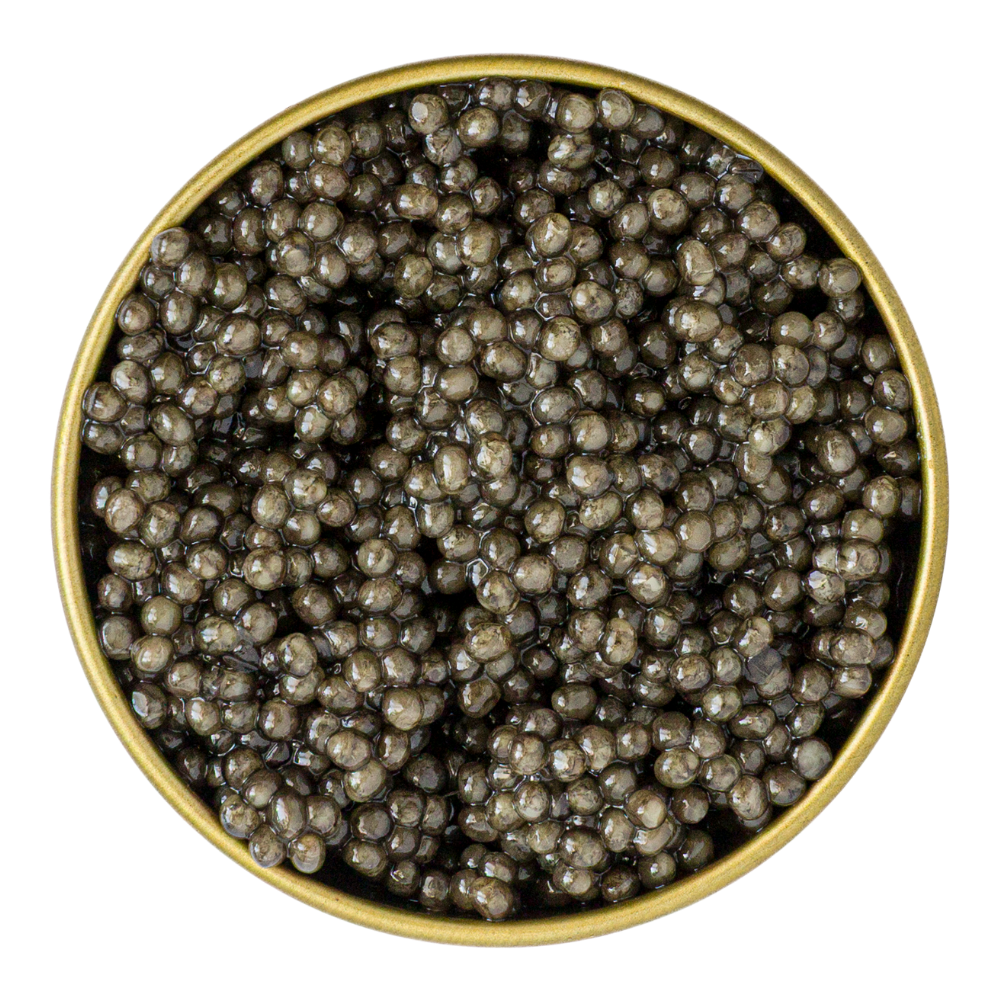
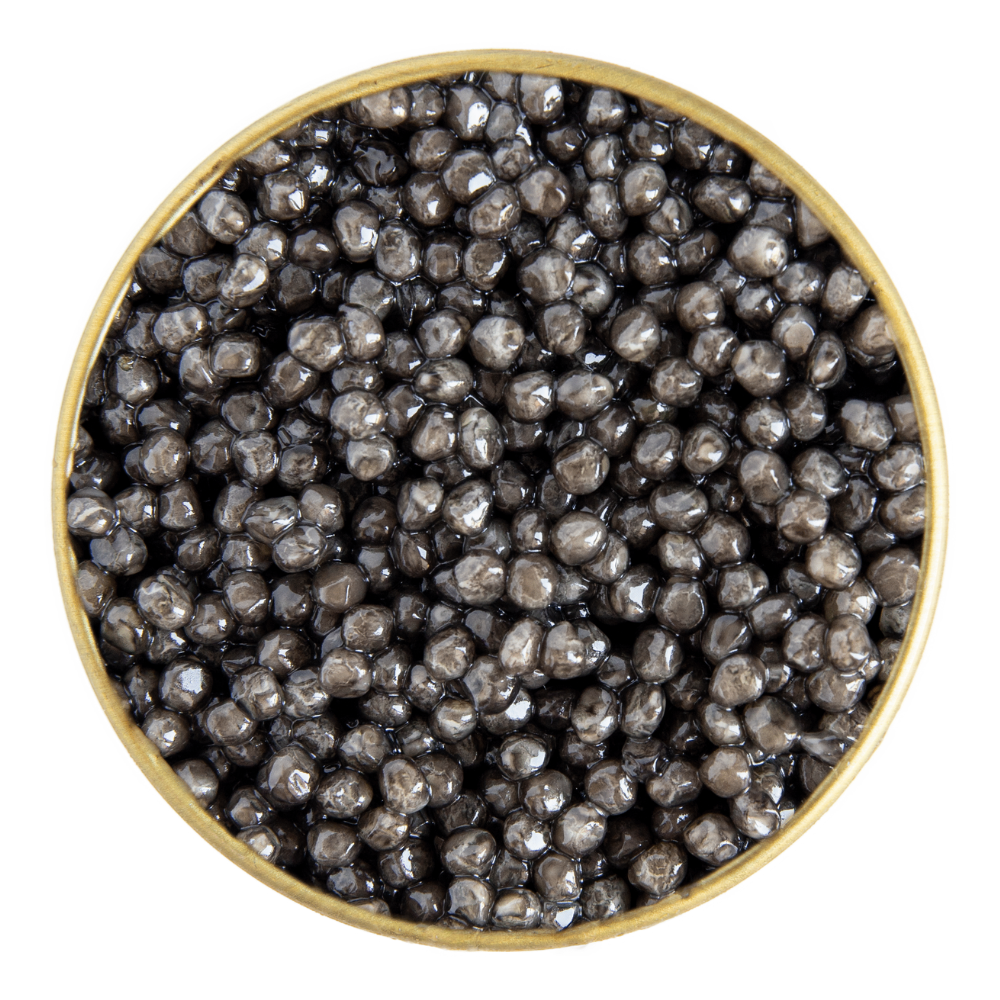
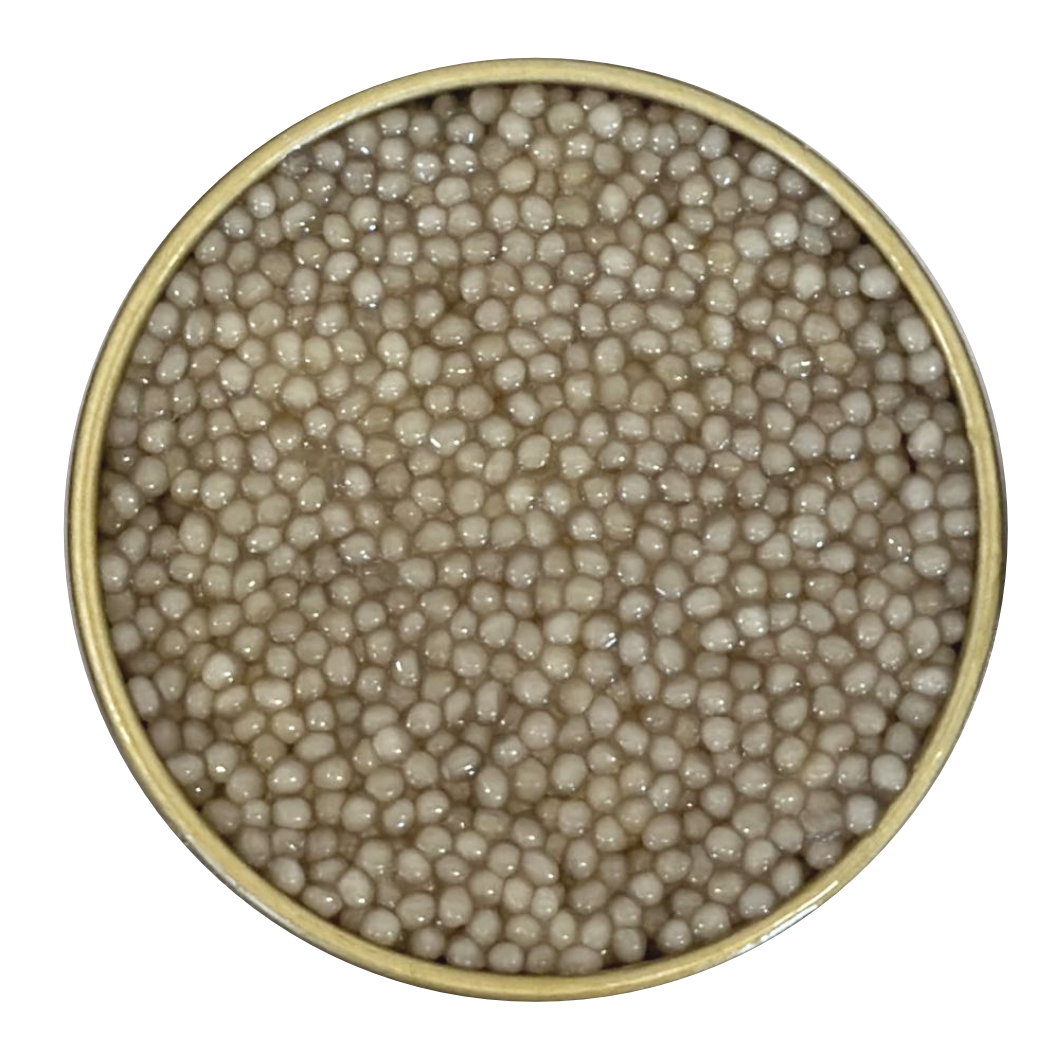
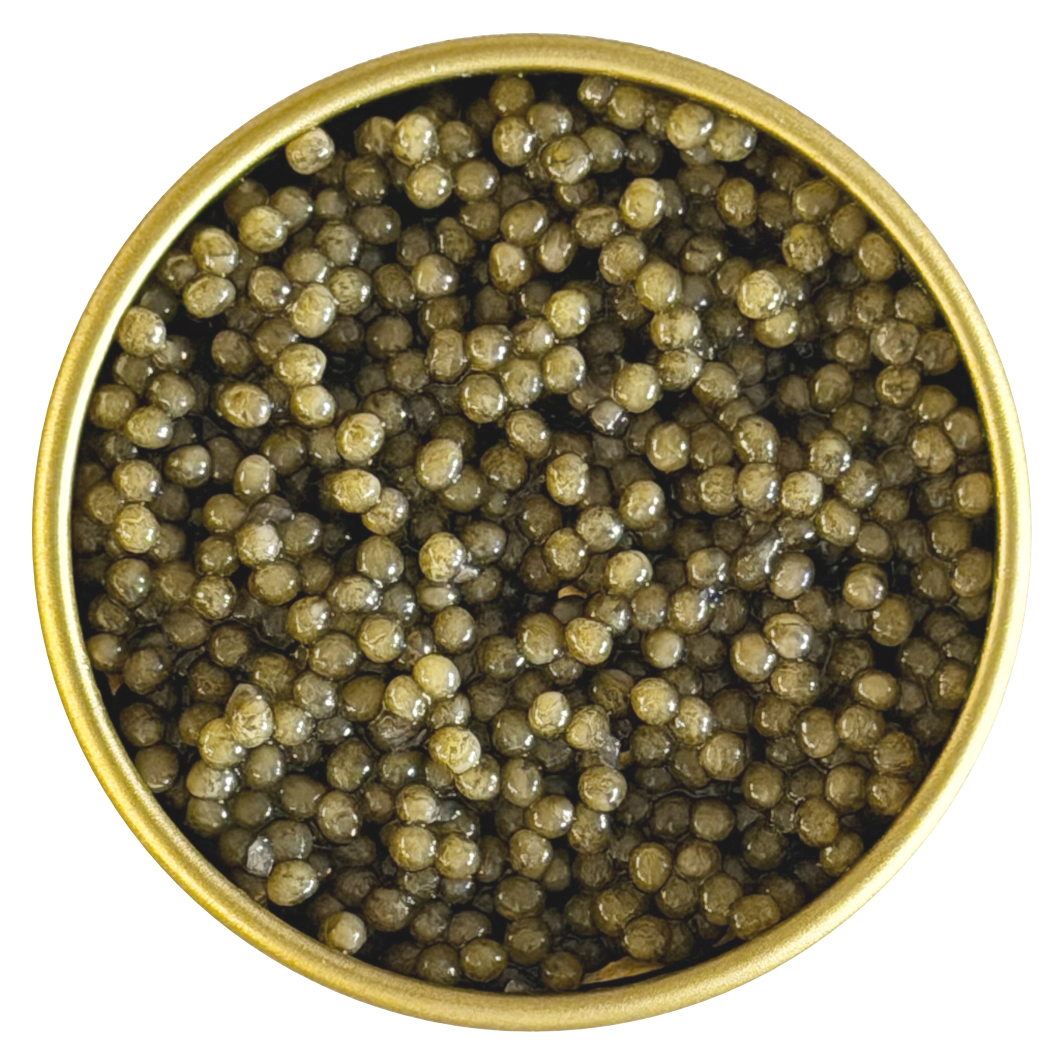


There are delicacies that simply want us to open them. And there is one that wants us to understand it.
Black caviar isn’t just a dish you put on the table – it’s a moment you prepare. Every grain is the result of years of patience: from the sturgeon, which grows slowly in clear waters, to the master who salts it at precisely the right moment – not a second later. To serve it carelessly is to disregard all of that.
Good service is not about showing off. It is a form of respect – for the food, for the guest and for the occasion itself. The good news is that it requires neither special training nor expensive equipment. It is based on three simple things that anyone can master: the right temperature, the right spoon and the right order. Once you’ve mastered them, every serving becomes a little work of art.
Temperature: the basis of everything
Caviar reveals its true character only when served cold – but never ice-cold and never frozen. The ideal serving temperature is between 4 and 8 degrees. Within this range, the aroma unfolds fully, the texture remains velvety, and the flavour is pure, briny and delicate.
That is why caviar is taken out of the fridge just a few minutes before it is served. Left at room temperature, it quickly loses its freshness: the oils begin to separate, the grains soften, and the delicate flavour gives way to a heavy taste. Heat is caviar’s greatest enemy and the only thing that can render the months of labour that went into it meaningless.
The classic way to keep it in perfect condition throughout the whole experience is to use an ice bath. Place the tin or bowl of caviar on a bed of crushed ice in a larger container. This way, it stays cold from the first to the last bite, without coming into direct contact with the ice, as water and melted ice are also undesirable companions.
One rule worth remembering: caviar is frozen only once by the producer, under strictly controlled conditions. Once thawed, it is never refrozen. This destroys the cellular structure of the roe and irreversibly alters the flavour. The freshness of caviar cannot be restored; it can only be preserved.
The Spoon: why the material matters
If there is one detail that distinguishes the connoisseur from the casual consumer, it is the spoon.
Caviar must never come into contact with metal. Silver, stainless steel and any other metal react with the delicate oils in the caviar, leaving a subtle but noticeable metallic aftertaste that compromises the purity of the flavour. What nature has taken years to create can be compromised in seconds by a simple piece of cutlery.
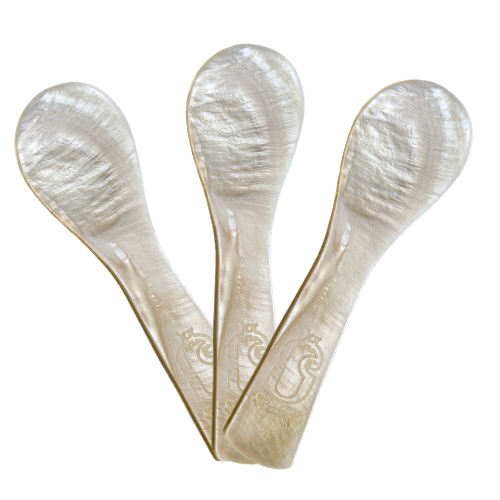
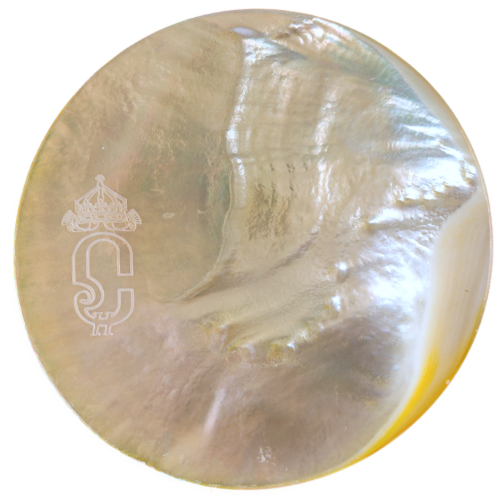
That is why tradition dictates the use of a spoon made of mother-of-pearl, bone, horn or even glass. Mother-of-pearl is the most refined choice – it is completely neutral, imparts no taste or smell, and allows the caviar to speak for itself. Moreover, mother-of-pearl is beautiful: its pearly lustre adds to the visual pleasure of the presentation and transforms a simple bite into a small ritual.
This principle is not a modern fad. In the households where caviar first emerged as a luxury, mother-of-pearl and bone spoons have been an essential part of the serving set for centuries – not for the sake of ostentation, but because experience has long shown that metal spoils the flavour. What we now call etiquette is, in fact, practical wisdom, tried and tested over time.
That is precisely why we offer mother-of-pearl spoons with every AEmillius selection. They are not merely an accessory. They are part of the proper way to enjoy caviar – a detail that many overlook, yet one that makes all the difference.
The procedure: when and how
Caviar deserves to take centre stage, rather than competing with other strong flavours.
If you’re planning a menu, serve it right at the start, when the palate is fresh and receptive. Heavy, spicy or strongly flavoured dishes served before it dull the senses and detract from its subtlety. Caviar is the overture, not the finale – it sets the tone for the whole experience.
When served on its own, the purest experience is also the simplest: a small amount straight onto a clean teaspoon, with nothing else. This is the way to appreciate its true flavour – the creamy texture, the gentle crackling of the grains between the palate and the tongue, the freshness of the sea and the long, refined aftertaste that lingers long afterwards.
If you prefer classic accompaniments, the order in which you add them is important. Blinis, toast or boiled potatoes serve as a neutral base. A little crème fraîche adds a touch of creaminess. But the principle is simple: the fewer accompaniments, the better. They should complement the caviar, not mask it. By the same token, strong flavours such as onion or lemon in large quantities are more of a tradition from the days when caviar was of a lower quality – with today’s high-quality caviar, they are largely superfluous.
As for the quantity: for a tasting, around 10 to 15 grams per person is recommended, whilst for a more generous experience, between 30 and 50 grams is suggested. Caviar is not eaten in large mouthfuls. It should be savoured slowly, in small portions, so that each grain receives the attention it deserves.
The little details that make all the difference
Serve the caviar in its original tin on ice or in a glass, mother-of-pearl or porcelain bowl — again, never metal. Prepare the glasses in advance: champagne and dry white wine are the natural accompaniments to caviar, as their freshness and delicate bubbles cleanse the palate between mouthfuls and emphasise its maritime character. Brut champagne is the classic choice, but well-chilled vodka is also part of the tradition – pure, neutral and refined enough not to compete with the caviar itself. Avoid heavy red wines and sweet drinks; they overwhelm the delicate flavour rather than complementing it.
Open the tin in front of your guests. This gesture is significant – it turns the serving of the caviar into a little event and hints that something special is in store. And don’t rush. Caviar rewards those who take their time with it.
The mistakes that give away a beginner
Even with the finest caviar, a few common mistakes can spoil the experience – and they’re all easily avoided.
The first is temperature: caviar left out for too long loses its texture and starts to smell stronger than it should. The second is the metal spoon or fork, which is almost always to hand and almost always a mistake. The third is overloading it with accompaniments – onion, egg, lemon and sauce all at once turn this delicacy into a run-of-the-mill appetiser and obscure the very reason you chose it in the first place. The fourth is serving it at the end of a lavish meal, when the palate is already tired and cannot appreciate its subtlety. And the last, perhaps the most subtle: haste. Gulped down in a large mouthful, as an afterthought, the caviar remains a mystery.
Avoiding these five mistakes doesn’t require experience. It just requires attention – and attention is exactly what this delicacy deserves.
The ritual is part of the experience
In a world that eats on the go, caviar invites us to slow down. The right temperature, the right spoon and the right order are not mere formalities devised to complicate a simple pleasure. They are the wisdom of experience – the way in which generations of connoisseurs have discovered that this delicacy reveals its very best.
When you serve caviar properly, you’re not just following rules. You’re paying due respect to something rare and creating a moment your guests will remember. Because the little care you put into the preparation pays off many times over in enjoyment – and turns a single bite into a memory.
Because true luxury isn’t just about what you serve. It’s also about the way you do it.
Discover AEmillius’s selection of black caviar and the mother-of-pearl spoons designed to complement it — for moments that deserve to be savoured in style.