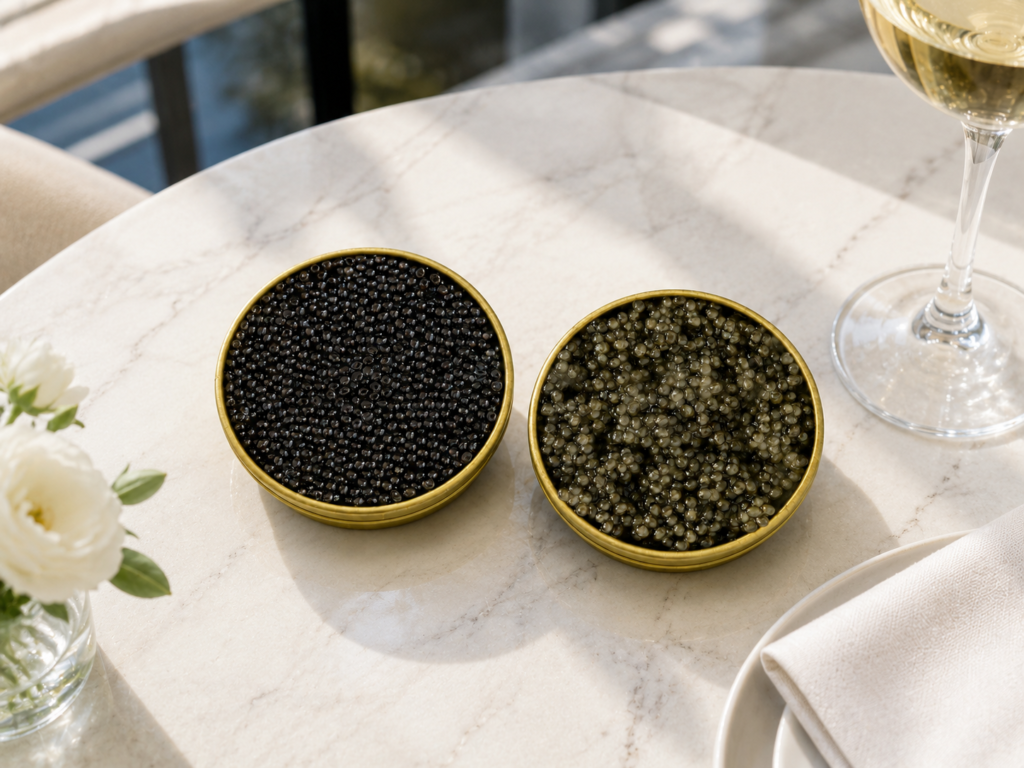
The short answer is: black caviar contains approximately 264 kcal per 100 g According to the US Department of Agriculture (USDA) database, that is, around 13 kcal in a 5 g teaspoon, 42 kcal in a 16-gram tablespoon and 79 kcal in a 30-gram portion. The calorie content of black caviar is only part of the equation: the rest comes from the blini, the butter and the glass of drink served with it.
Calories are rarely discussed over a meal of black caviar. They’re discussed afterwards, on a search engine. The figures are public and more pleasant than most people expect, whilst the calories in an evening of caviar are mainly hidden outside the tin.
How many calories are there in 100 grams of black caviar?
Black caviar contains 264 kcal per 100 g, or around 1,100 kJ, according to FoodData Central, the USDA’s food composition database. The figure is taken from the entry „Fish, caviar, black and red, granular“.
On European labels, energy is stated first in kilojoules, then in kilocalories. One hundred grams of caviar is enough for three or four people when it is served as part of a dinner, so the figure of 100 g is mainly used for comparison with other foods.
How many calories are there in a teaspoon of black caviar?
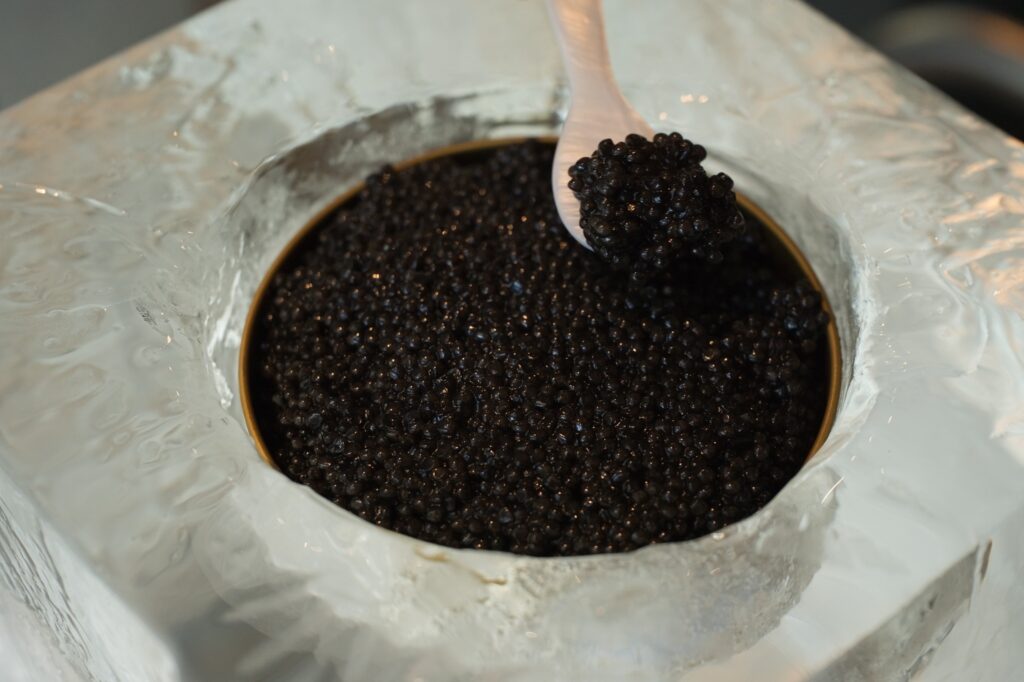
One tablespoon of black caviar (16 g according to the USDA) contains around 42 kcal, whilst one teaspoon (around 5 g, a third of a tablespoon) contains around 13 kcal. A tablespoon also provides 3.9 g of protein and 2.9 g of fat. We also state a similar figure – around 40 to 42 kcal per tablespoon of approximately 16 g – in our Questions and answers about black caviar.
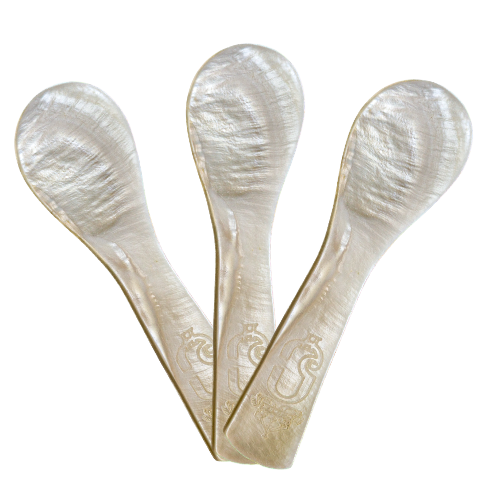
Caviar is eaten in small bites, without chewing, with mother-of-pearl spoon or a teaspoon made of bone or glass. Ten such spoonfuls, each weighing about 3 g, make up 30 g of caviar and about 79 kcal.
How many calories are there in a portion and in a whole tin of black caviar?
A 30 g portion of black caviar contains around 79 kcal, whilst one ounce (28.35 g) contains around 75 kcal. When caviar is served as part of a dinner, the portion size is up to 30 g per person. Thirty grams contain:
- around 7.4 g of protein;
- around 5.4 g of fat, of which 1.2 g is saturated;
- around 1.2 g of carbohydrates.
The calories in a whole packet are easy to work out: 2.64 kcal per gram. A 50 g tin contains around 132 kcal, a 125 g tin around 330 kcal, and a 250 g tin around 660 kcal – that is, around 165 kcal per person if shared between four people. In our range, the smallest tins of fresh black caviar are 30 and 50 g; the most common sizes are 125 and 250 g, and for groups of 10 to 15 people, there are also tins of 1,000 and 1,700 g.
Where do the calories in black caviar come from?
Around 58% of the calories in black caviar come from fat, around 36% from protein and around 6% from carbohydrates. This breakdown is calculated using USDA data (24.6 g protein, 17.9 g of fat and 4 g of carbohydrates per 100 g) using European labelling coefficients: 4 kcal per gram of protein and carbohydrates, and 9 kcal per gram of fat.
The rest of the weight consists of water (47.5 g per 100 g) and minerals (6.5 g), mainly salt. Neither water nor minerals contain calories. Fat accounts for less than a fifth of the weight, but it counts towards the total because a gram of fat provides more than twice as much energy as a gram of protein.
Why do different sources give different calorie counts for caviar?
Sources give different calorie figures for black caviar because they use different data and different coefficients to calculate energy content. This is why calculators show, for example, 252 or 264 kcal per 100 g, even when the macronutrients are identical.
- Various entries. The USDA listing combines black and red granulated caviar, whilst caviar from a specific species of sturgeon has its own composition.
- Various coefficients. Using the same macronutrients and the European conversion factors of 4, 9 and 4, this works out at around 275 kcal.
The practical conclusion: a difference of up to 25 kcal per 100 g means at most 7 to 8 kcal per 30 g portion. That’s less than a teaspoon of caviar.
Is there a difference in the calorie content of beluga, Russian and Siberian sturgeon?
The calorie content of caviar from different species of sturgeon varies only slightly, as it depends mainly on the fat content, and this varies within a narrow range. The USDA database does not break down caviar by species, so the figure of 264 kcal is a guide rather than a value for a specific tin.
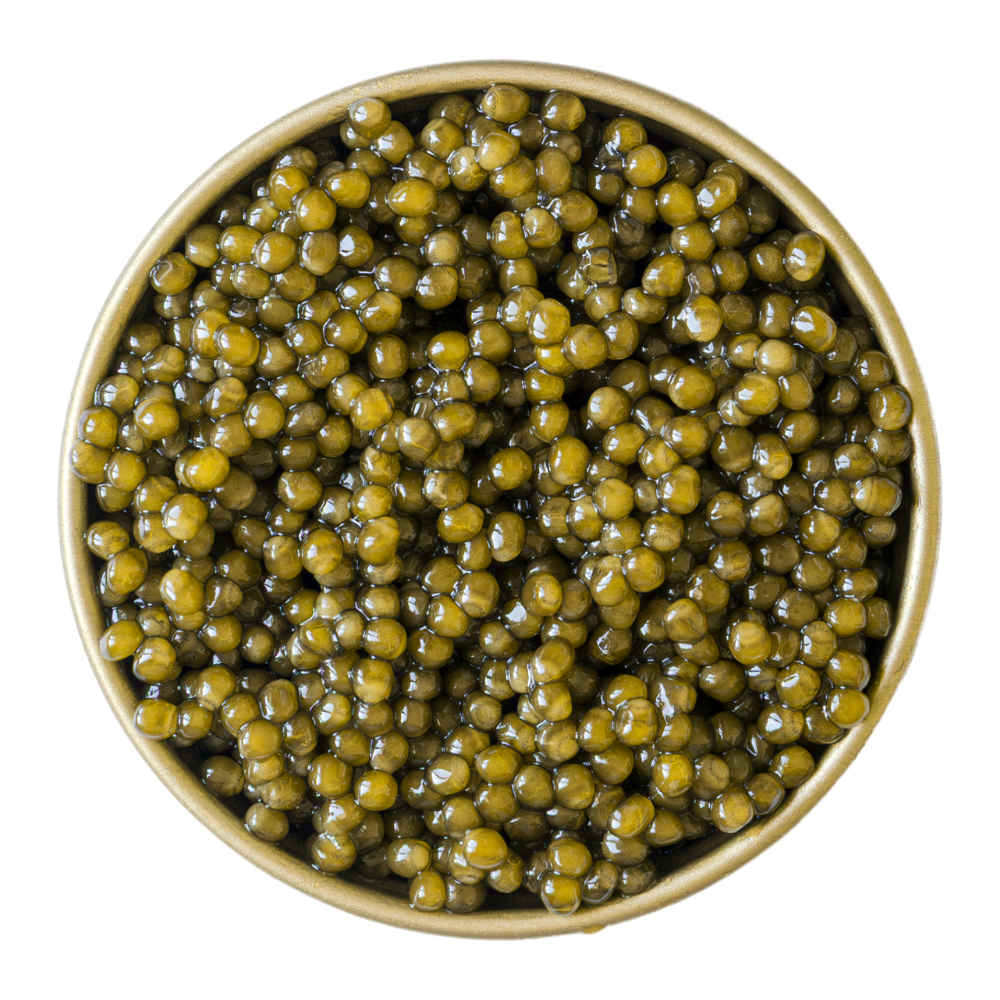
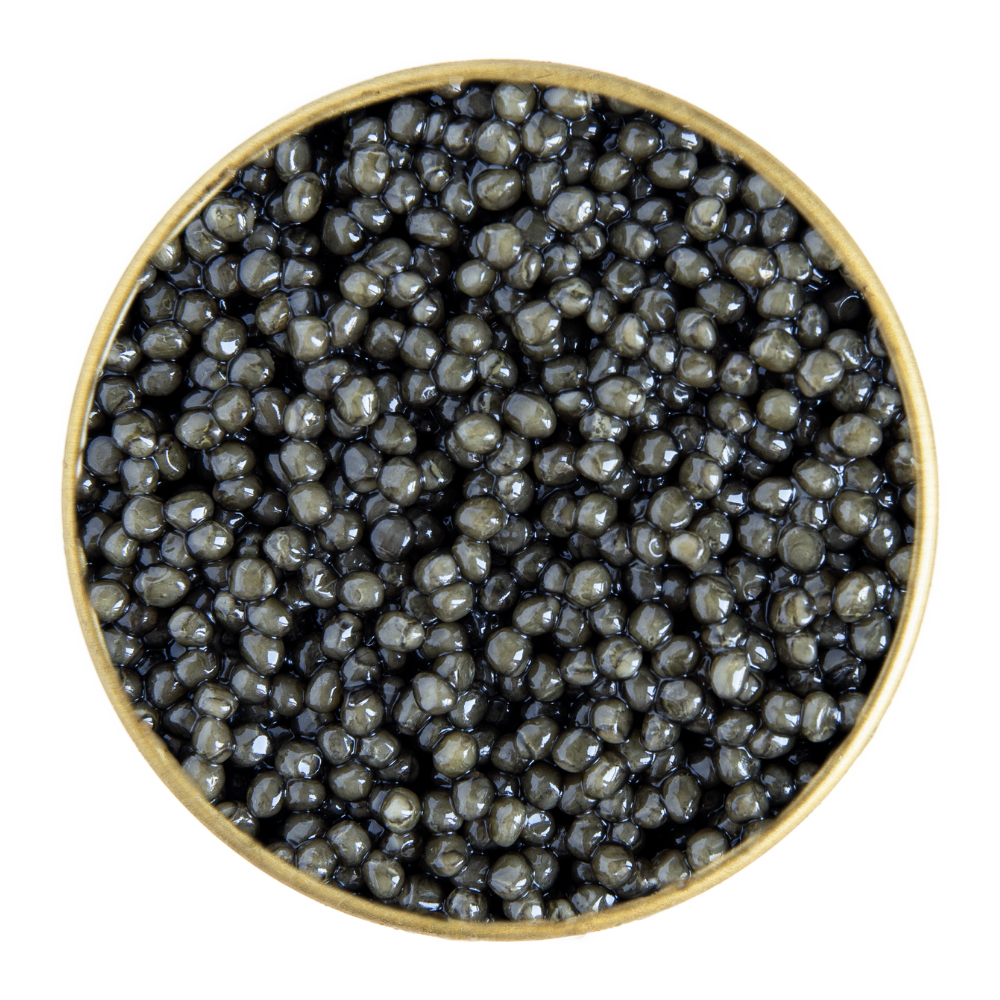
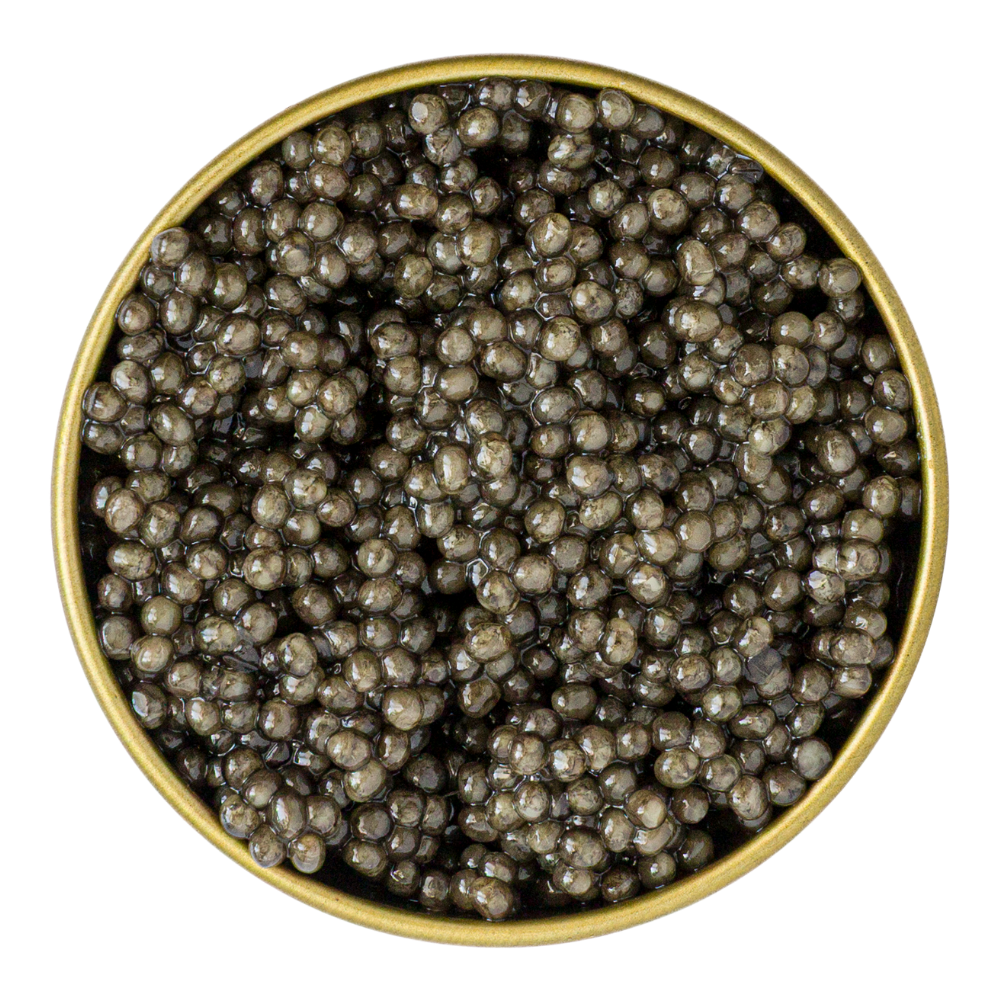
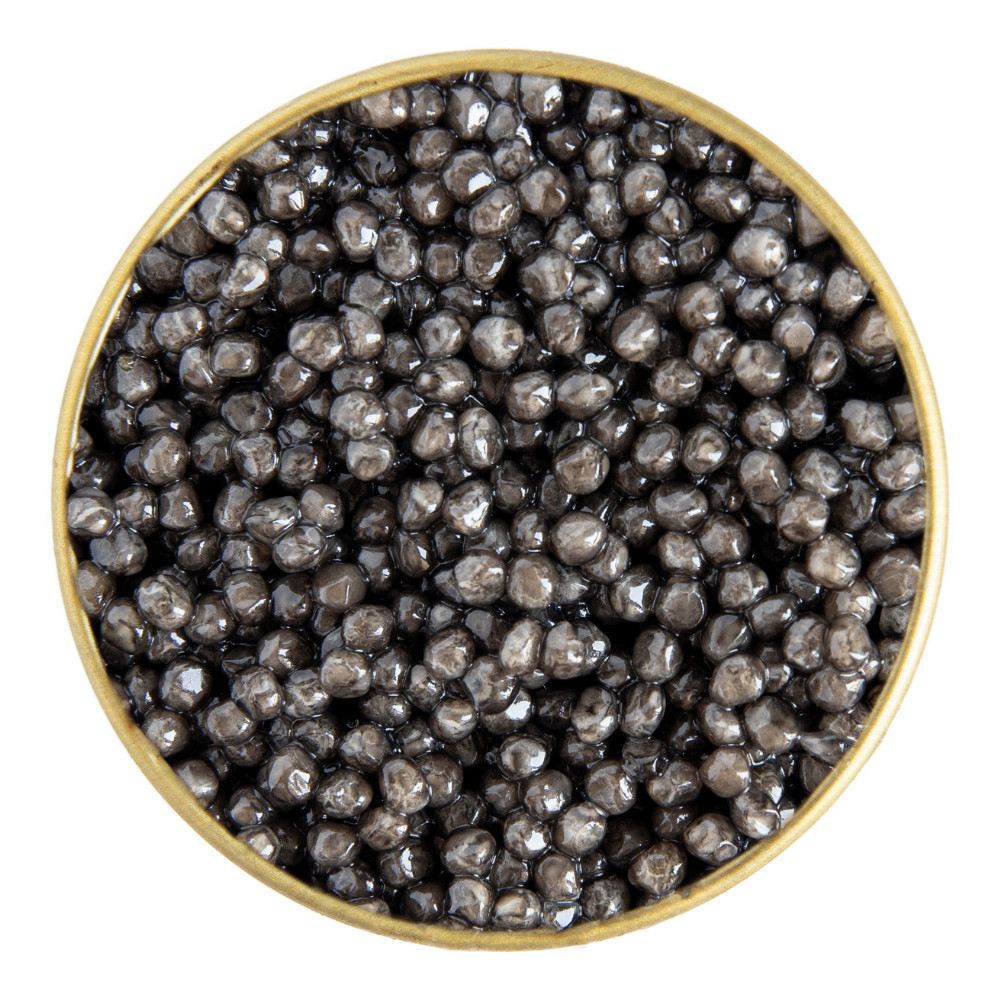
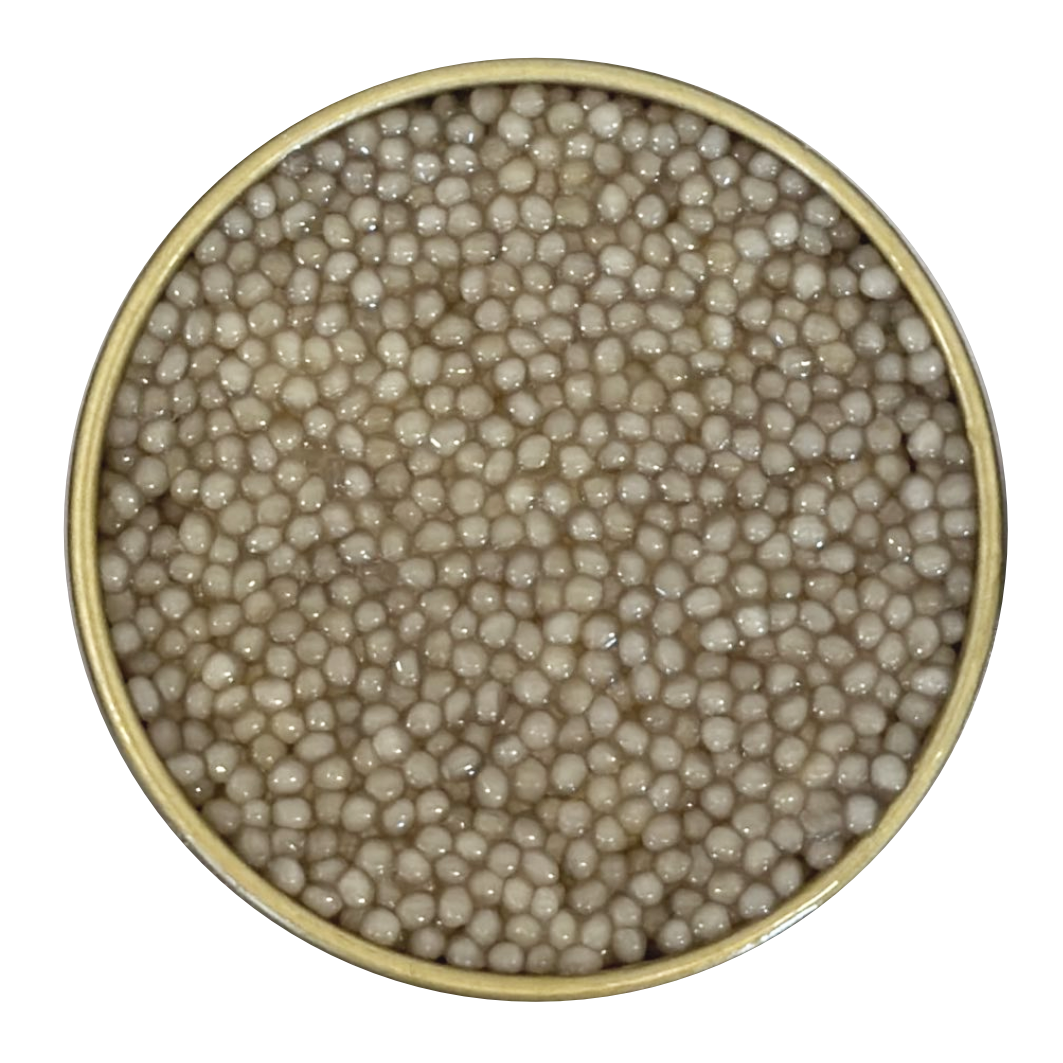
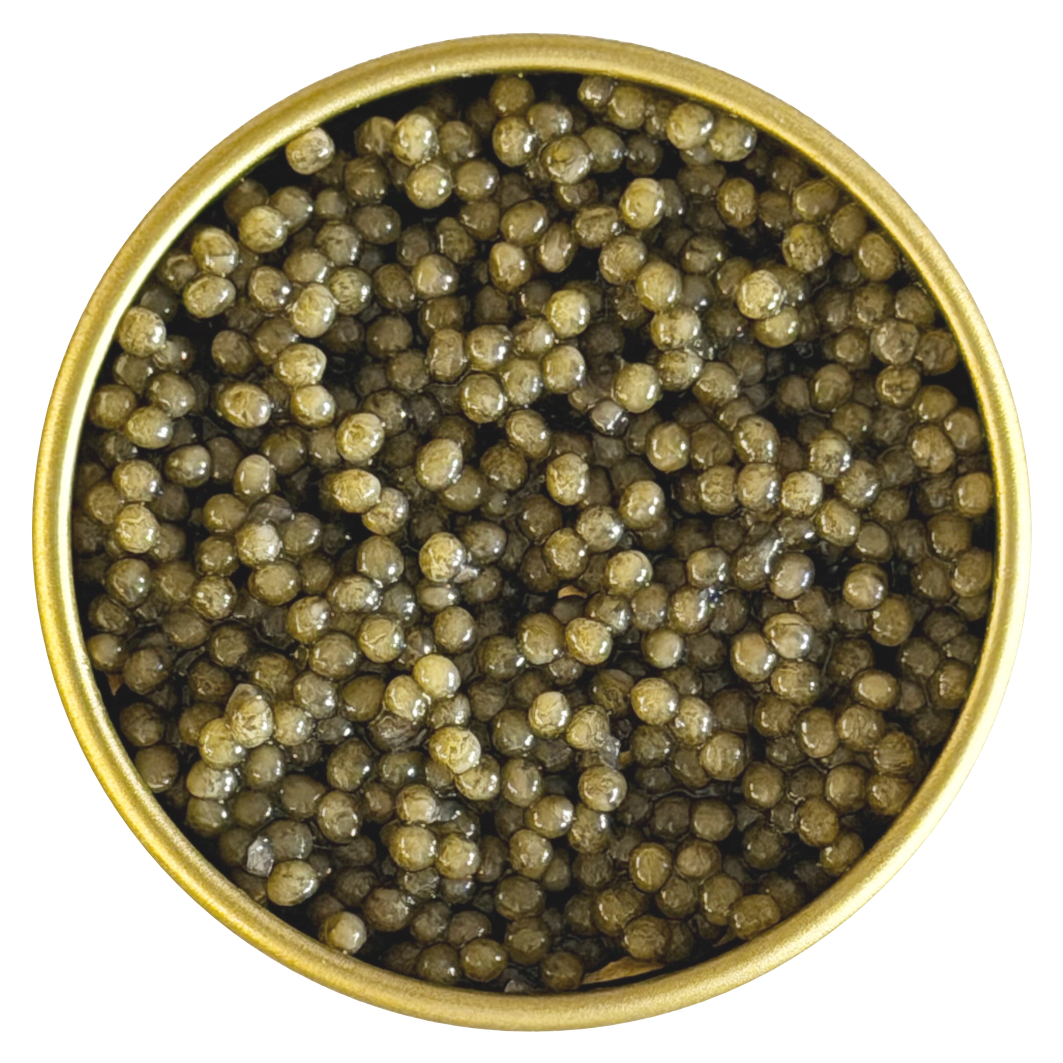
In a study of caviar from three species of farmed sturgeon, including the Siberian sturgeon, the average fat content ranges between 14.2 and 16.2% depending on the variety, and the authors found no significant difference between the varieties. A difference of two percentage points amounts to around 18 kcal per 100 g, or around 5 kcal per 30 g portion. The soft, buttery texture of Baerii Gold Æmillius Caviar, the scent of the fresh sea at Russian sturgeon and the large pearls of the beluga They describe the taste and texture, not the energy content. Choose according to taste and the occasion, not the calories.
What fats does black caviar contain?
Around two-thirds of the fat in black caviar is unsaturated: according to USDA data, 100 g of caviar contains 17.9 g of fat, of which 7.4 g is polyunsaturated, 4.6 g is monounsaturated and 4.1 g is saturated. A large proportion of the polyunsaturated fats are the omega-3 fatty acids EPA and DHA, totalling around 6.5 g per 100 g in a combined sample of black and red caviar.
When it comes to calories, the type of fat doesn’t matter: every gram contains 9 kcal. You can find more details about omega-3s, vitamins and minerals in our article on the benefits of black caviar.
Are there any carbohydrates in black caviar?
Black caviar contains around 4 g of carbohydrates per 100 g, which is approximately 1.2 g in a 30 g portion. The USDA calculates this figure „by difference“: this is the remainder after measuring the water, protein, fat and minerals, rather than added sugar or starch.
If you’re counting carbohydrates, the caviar itself hardly counts at all. It does count the pancake, which contains many times more carbohydrates than the caviar on top of it.
How much protein is there in black caviar?
Black caviar contains 24.6 g of protein per 100 g, or approximately 7.4 g per 30 g portion. Around 36% of its energy content comes from protein, and under Regulation (EC) No 1924/2006, a food may bear the claim ‘high in protein’ when at least 20% of its energy comes from protein.
The health claim authorised in the EU also applies to caviar: protein helps maintain muscle mass as part of a varied and balanced diet and a healthy lifestyle. A 30 g portion covers approximately 15% of the reference intake of 50 g of protein per day.
Is black caviar a low-calorie food?
Black caviar is not a low-calorie food. Under European regulations, solid food may only be labelled as ‘low-energy’ if it contains up to 40 kcal per 100 g, whereas black caviar contains 264 kcal – more than six times the threshold.
In terms of daily calorie intake, caviar doesn’t count for much because of the small portion size: per gram, it contains more calories than salmon, but a tablespoon of caviar (42 kcal) is lower in calories than a tablespoon of butter (102 kcal).
How does black caviar compare to other foods in terms of calories?
Per 100 g, black caviar (264 kcal) is almost equal to feta-style cheese (265 kcal), it is higher in calories than farmed salmon (208 kcal) and chicken eggs (143 kcal), and is almost three times lighter than butter (717 kcal), according to USDA data. Per serving, the picture is even clearer:
- 30 g of black caviar: around 79 kcal.
- 30 g of feta-style cheese: around 80 kcal.
- One large egg, 50 g: around 72 kcal.
- One tablespoon of oil, 14.2 g: around 102 kcal.
In other words, a 30 g portion of caviar is roughly equivalent to one large egg. The main differences compared to red caviar are summarised in our article black versus red caviar.
How many calories do the pancakes and butter add?
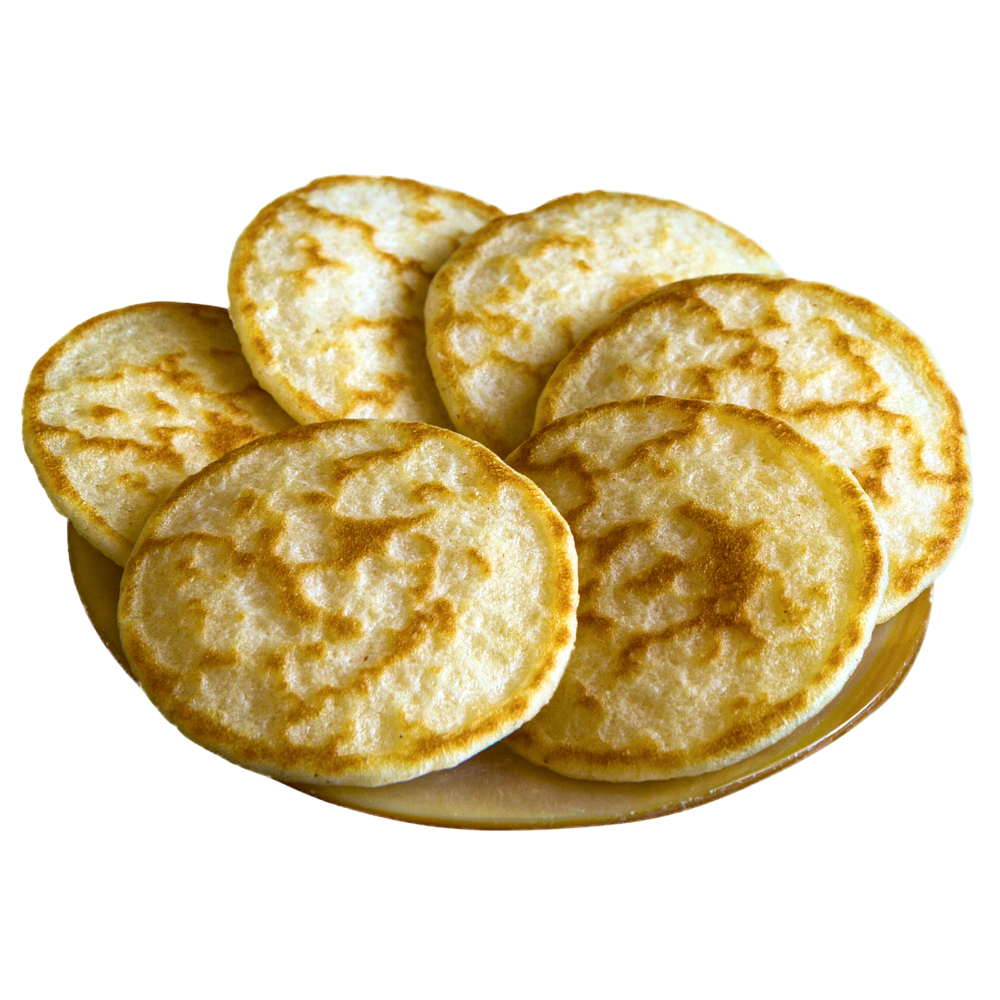
The pancakes and butter usually add more calories than the caviar itself. One tablespoon of cow’s butter (14.2 g) contains around 102 kcal, meaning a thin layer of 3 to 5 g on a pancake adds between 22 and 36 kcal. A small pancake weighing about 10 g adds a further 20 to 30 kcal: the USDA lists 227 kcal per 100 g for homemade pancakes.
Here’s the breakdown for a typical portion: 30 g of caviar on three small pancakes, warmed and spread with butter, just as we serve them.
- Caviar, 30 g: approx. 79 kcal.
- Three small pancakes: around 60 to 90 kcal.
- Oil, approx. 12 g in total: approx. 86 kcal.
- Total: approximately 225 to 255 kcal, of which caviar accounts for about a third.
In this bite, the butter contains more calories than the caviar. Our pancakes They are 40 mm in diameter, with 10 in each pack. The pancakes vary in size and recipe, so please use the calculation above as a guide. You can find out more about the snack itself in the article caviar and blinis.
How many calories does crème fraîche add to caviar?
One tablespoon of crème fraîche (around 15 g) with the usual fat content of around 30% adds around 40 to 45 kcal, almost as much as a tablespoon of caviar. Almost all of this energy comes from around 4.5 g of fat.
Our recommendation, however, has nothing to do with calories: caviar is eaten on its own, by the spoonful, or on a warm blini with butter. The finest caviar is eaten on its own.
How many calories are there in the glass next to the caviar?
Glass dry white wine (150 ml, 12 to 13% alcohol) contains around 100 to 110 kcal, a glass of brut champagne (125 ml) contains around 85 to 90 kcal, whilst 50 ml vodka with 40% alcohol, containing around 110 kcal. Almost all of this energy comes from the alcohol: under European labelling rules, one gram of alcohol contains 7 kcal, and one millilitre weighs around 0.79 g.
Each of these glasses contains more calories than the 30 grams of caviar served alongside it.
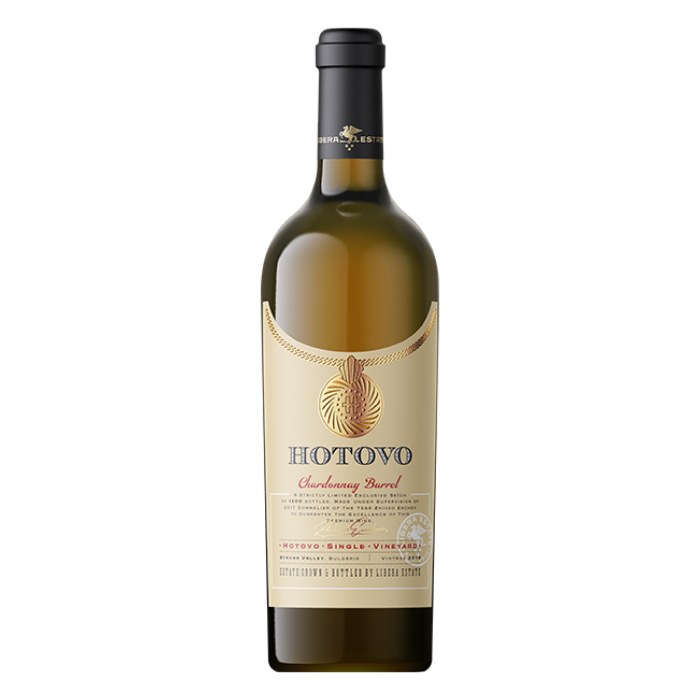
Calories don’t change our pairings: a dry white wine, Hotovo, with Baerii Gold, chilled Czechoslovakian vodka to accompany the Russian sturgeon, whilst the beluga is served on its own, in its natural state. When the occasion calls for bubbles, we pour brut champagne. For those who don’t drink, we recommend lightly carbonated water: 0 kcal and a clean palate between mouthfuls.
Does black caviar make you put on weight?
Black caviar on its own rarely makes a significant difference to your daily intake, as it is eaten in small quantities: a 30 g portion contains around 79 kcal, which is about 4% of the 2,000 kcal reference intake used by the EU for food labelling. Even when caviar and drinks are the main focus and you allow for 50 to 80 g per person, this amounts to around 130 to 210 kcal. Body weight depends on the overall energy balance over days and weeks, rather than on a single meal.
If you’re counting calories, the rule is simple: eat the caviar on its own, by the teaspoonful, and count the pancakes, the butter and the glass. If you’re not counting calories, the rule is even simpler: just enjoy it. With caviar, we’re eating happiness, and according to the USDA, one teaspoon of happiness is about 13 kcal.
What should we bear in mind about the calorie content of black caviar?
- 264 kcal per 100 g according to the USDA, or around 1,100 kJ.
- About 13 kcal in a teaspoon, 42 kcal in a tablespoon and 79 kcal in a 30 g portion.
- Around 58% of the energy comes from fat, 36% from protein and 6% from carbohydrates.
- Caviar isn’t low in calories per gram, but the portion size is small.
- The pancakes, butter and glass usually contain more calories than the caviar itself.
- Caviar contains the fewest calories when eaten plain, by the teaspoonful. This is also how the finest caviar is eaten.
Sources
- USDA FoodData Central – Fish, caviar, black and red, granular (FDC 174188)
- USDA FoodData Central – Cheese, feta (FDC 173420)
- USDA FoodData Central – Butter, salted (FDC 173410)
- USDA FoodData Central – Egg, whole, raw, fresh (FDC 171287)
- USDA FoodData Central – Fish, salmon, Atlantic, farmed, raw (FDC 175167)
- USDA FoodData Central – Plain pancakes, made to recipe (FDC 175009)
- Gong et al. (2013), *Journal of Food and Nutrition Research*
- EUR-Lex – Regulation (EU) No 1169/2011 (food information)
- EUR-Lex – Regulation (EC) No 1924/2006 (nutrition and health claims)
- EUR-Lex – Regulation (EU) No 432/2012 (authorised health claims)