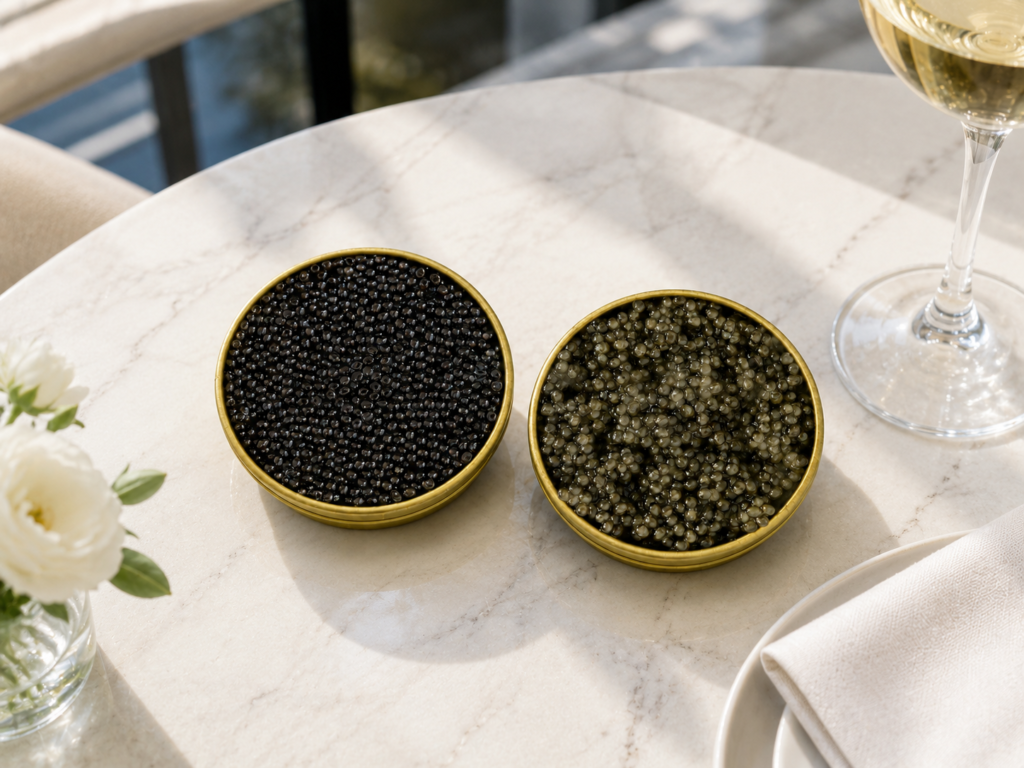
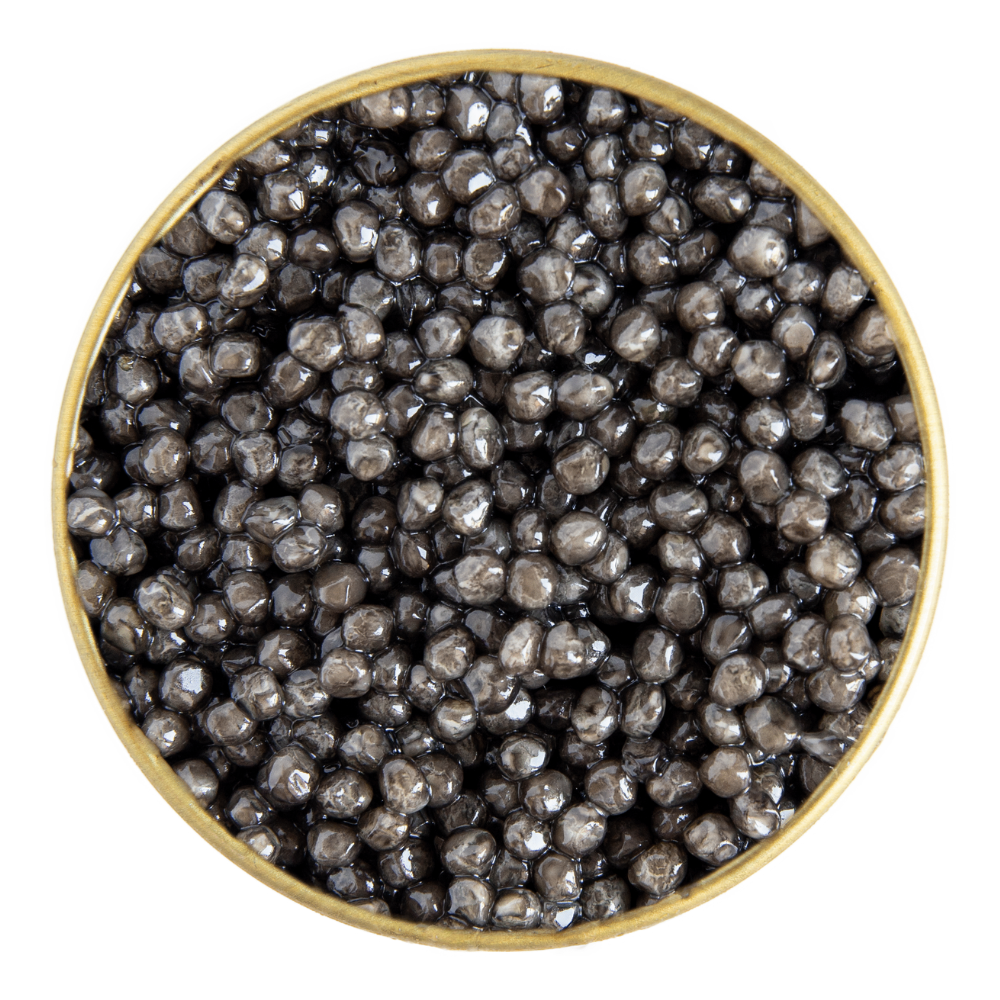

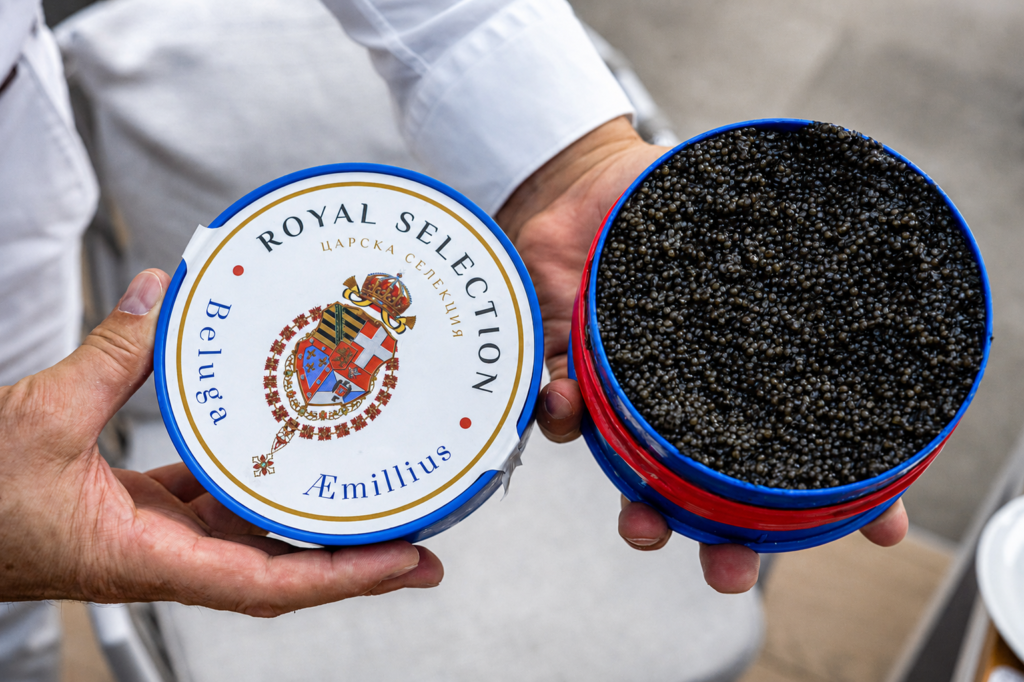
The shortest answer is: the real one black caviar is produced from the eggs of female sturgeon. Sturgeons are not a single species, but a whole group of ancient fish, each of which produces caviar with different grain size, colour, texture and flavour profile.
At AEmillius Caviar, we often come across the same misconception: people recognise black caviar as a symbol of sophistication, but do not know which fish it comes from. Some assume that any dark fish roe is „black caviar“. Others believe that Beluga, Ossetra и Baerii are different methods of processing. In fact, these names refer to different species of sturgeon or to the relevant commercial varieties.
What does „genuine caviar“ actually mean?
In the strict gastronomic sense, the word „caviar“ refers to the salted, unfertilised eggs of sturgeon. The sturgeon belongs to one of the most ancient groups of fish and inhabits freshwater, coastal and inland waters. It is precisely its eggs that the world recognises as caviar.
The roe of salmon, trout, carp, pike or sea rabbit can be a delicious delicacy, but it is not black sturgeon caviar. It is more accurate to refer to it by the name of the specific fish. Colour is not a reliable guide either: genuine sturgeon caviar can be almost black, dark grey, brownish, olive, golden and even very light in colour.
Therefore, the question is not simply „Are the nipples black?“, but „What species of fish are they made from, where do they come from, and how have they been processed?“
Siberian sturgeon: an accessible gateway to the world of black caviar
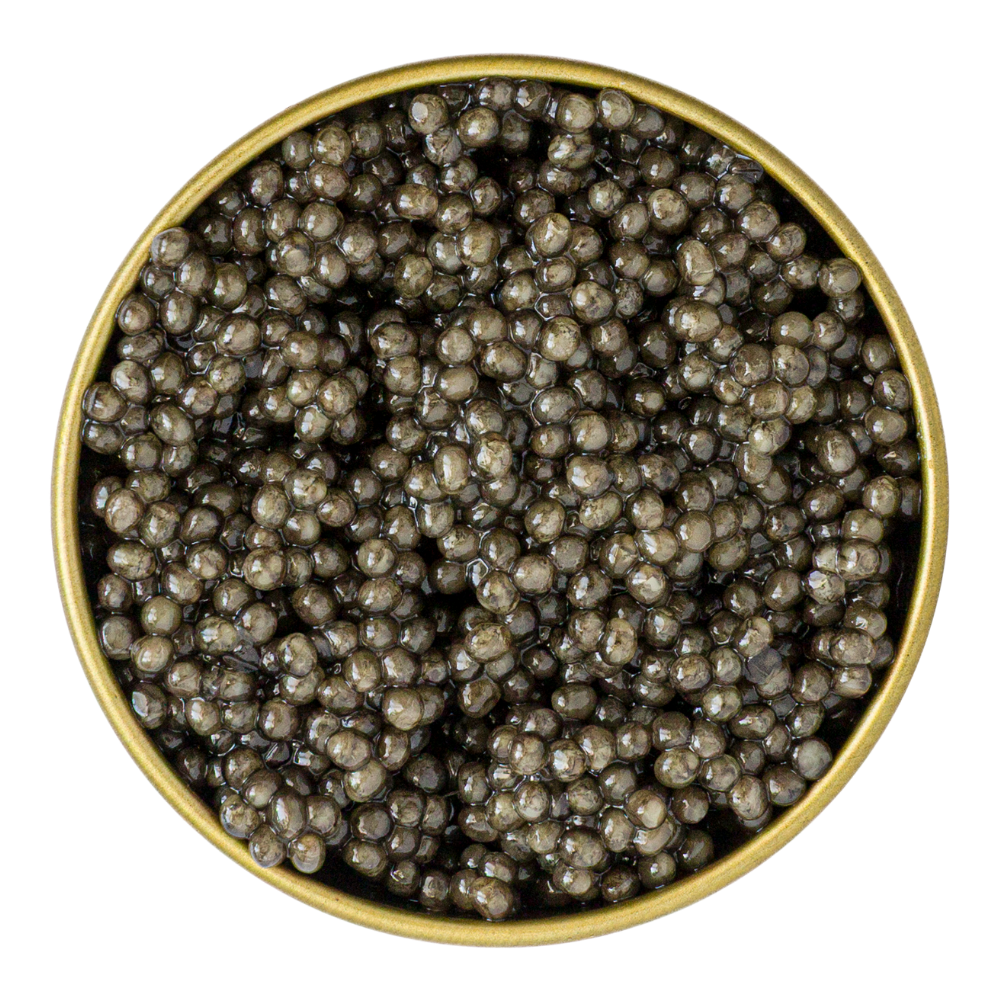
The Siberian sturgeon has the Latin name Acipenser baerii. Its roe is typically characterised by medium-sized grains, dark grey to brownish hues, and a mild, buttery, delicately salty flavour. It is one of the most recognisable and widespread species in modern sturgeon farming.
Baerii is often an excellent choice for first tasting. Its flavour is distinctive enough to give a sense of what real black caviar is like, but it is not usually too intense for someone with no previous experience.
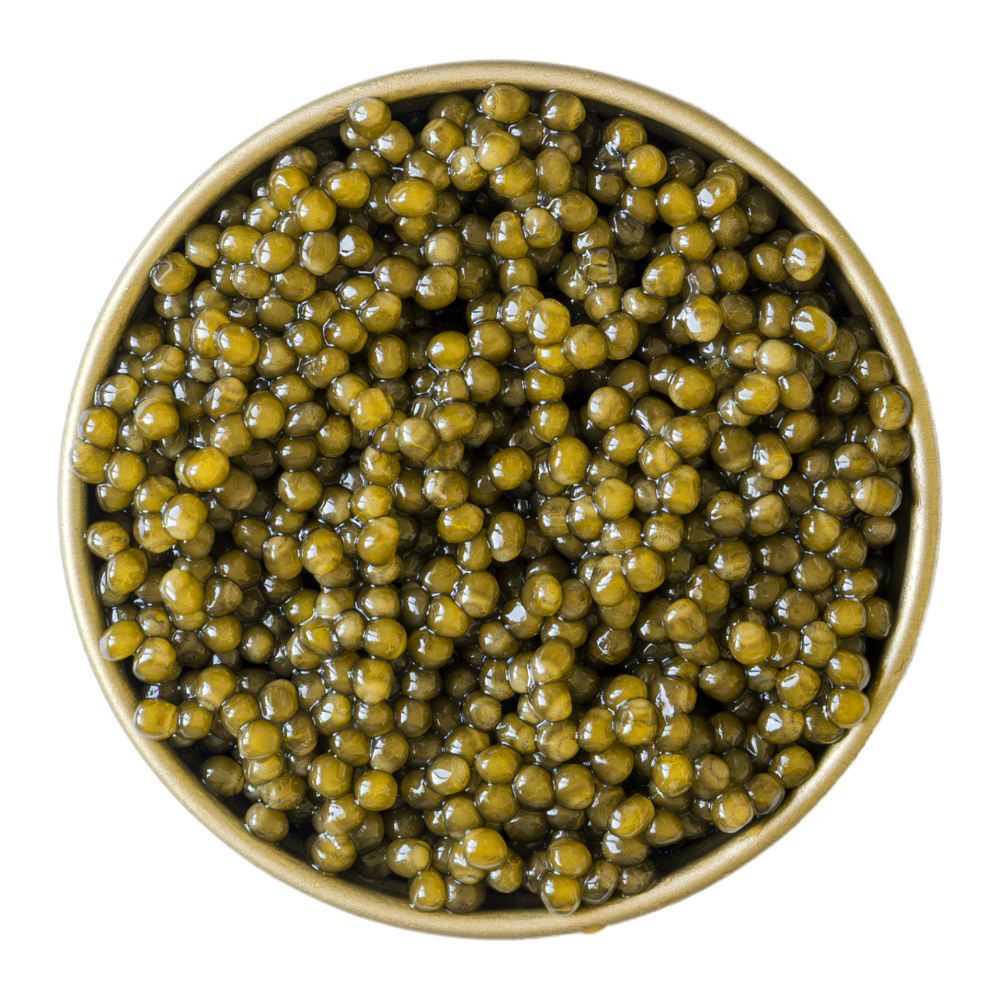
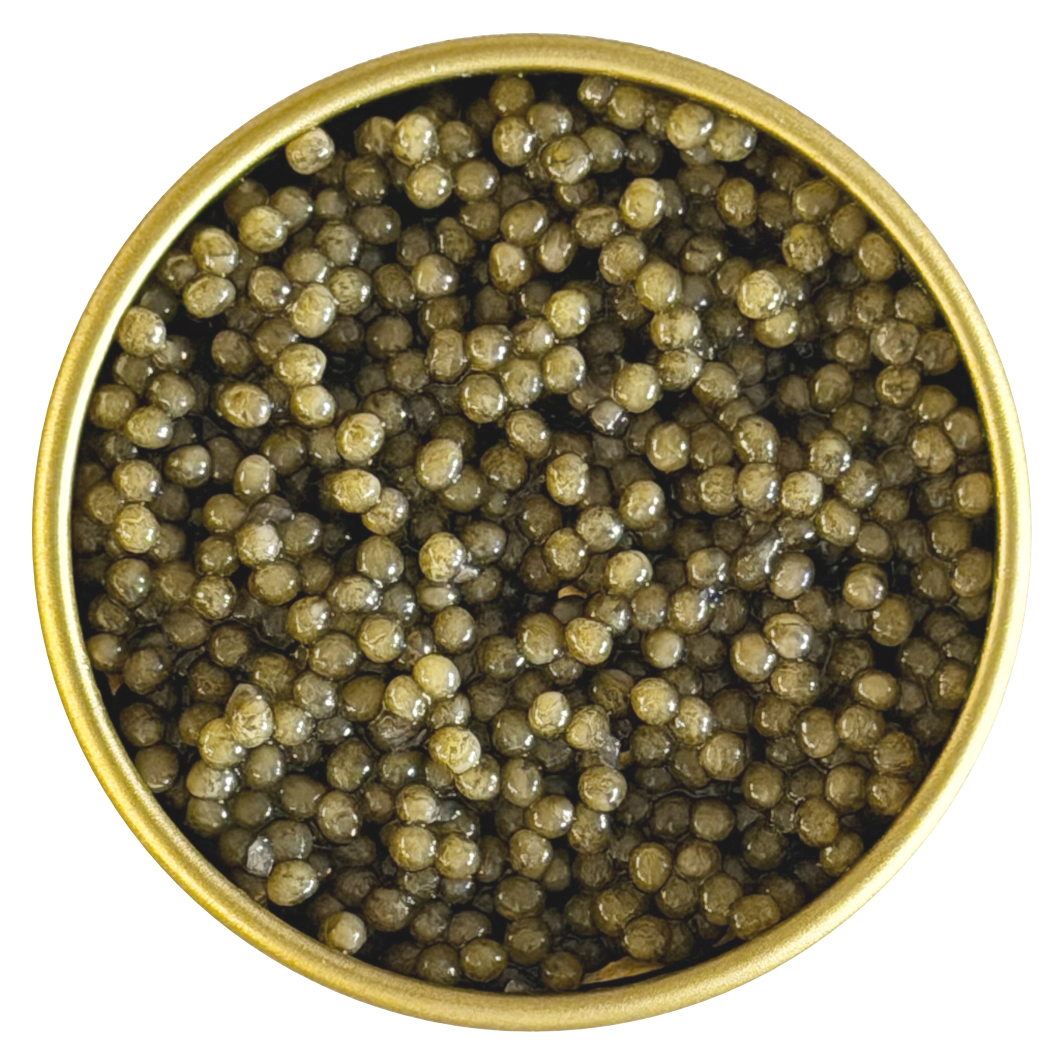
In our collection Baerii Gold Æmillius Caviar It is characterised by large grains, golden highlights and a distinctive buttery flavour. The product is produced in Bulgaria from the caviar of Siberian sturgeon, farmed at a specialised sturgeon farm.
Good-quality caviar doesn’t necessarily have to be the most expensive. It’s more important that it’s fresh, properly stored and with a distinct, pleasant flavour. That is why Baerii is a natural starting point.
Russian sturgeon: the origins of Ossetra
The Russian sturgeon is Acipenser gueldenstaedtii, and its roe is widely known as Ossetra or Osetra. It usually has a firmer texture and a distinct, clean flavour with a long finish. The colour can range from grey and brownish to olive and golden.
However, the species name alone does not tell the whole story. Batches can vary in terms of grain size and uniformity, colour, maturity, salinity and flavour profile. That is why at AEmillius we assess not only the species of fish, but also the specific selection.
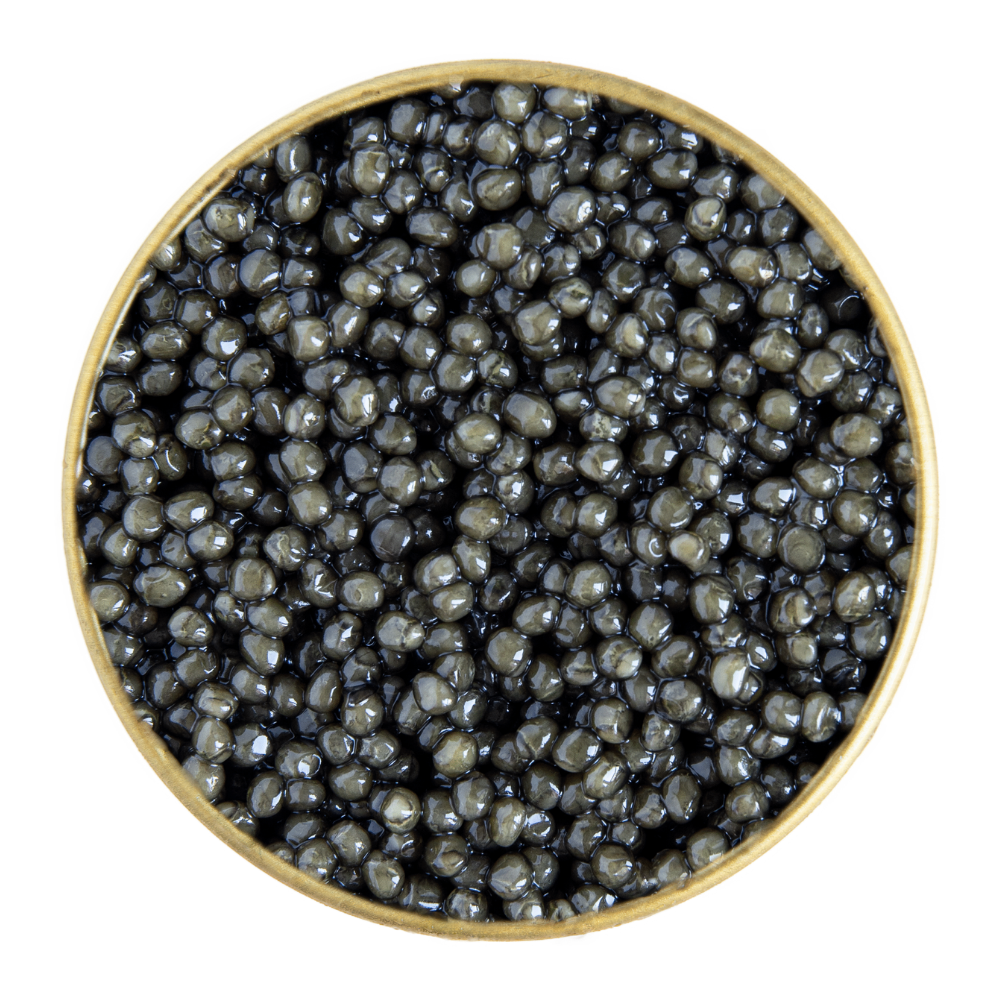
Russian Sturgeon Premium It is one of the favourite choices of our loyal customers and is often selected for festive occasions, birthdays and family celebrations. It is a fine example of caviar that has enough character to appeal to connoisseurs, yet remains well-balanced and easy to serve on a variety of occasions.
The rarer varieties of Russian sturgeon may have distinct golden sheen. On our website, for example Russian Sturgeon Selection It is presented as a limited selection, as only a small proportion of the fish produce grains with a similar golden hue.
Beluga: caviar from the beluga sturgeon
Beluga is produced from moruna Huso huso – the largest species of sturgeon. This caviar is renowned for its large, delicate grains and its mild, refined flavour profile. When carefully selected, the membrane is delicate and the grains release smoothly, without any harsh or overpowering saltiness.
Beluga is not simply a synonym for „luxury caviar“, but a term referring to a specific species of fish. The size and delicacy of the roe, together with the careful selection process, contribute to the product’s rarity and high value.
In our collection Beluga CRU Æmillius Caviar is characterised by a rich, earthy flavour and a long finish, and Moruna Æmillius Caviar expresses our understanding of the ultimate experience of this kind.
These selections are ideal for occasions when the caviar itself should be the focus of the tasting, rather than simply an accompaniment to a dish.
What is hybrid caviar?
Hybrid caviar It is produced from fish obtained by cross-breeding two species of sturgeon. This does not automatically imply lower quality. Hybridisation can combine desirable characteristics such as size and firmness of the roe, a balanced flavour and more predictable production in a controlled environment.
Quality depends on the origin, rearing, maturity of the eggs, processing and storage. Hybrid caviar should be judged on its taste and the information on the label, rather than on the preconceived notion that it is a compromise.
The AEmillius collection features hybrid varieties, including crosses between legendary species, which offer a distinctive marine character and their own unique identity. Such products demonstrate that quality is not determined solely by whether the fish is a pure breed or a hybrid.
For the consumer, the most important thing is that the producer or retailer clearly states the variety or hybrid. Transparency turns a beautiful description into verifiable information.
Is albino caviar a separate species?
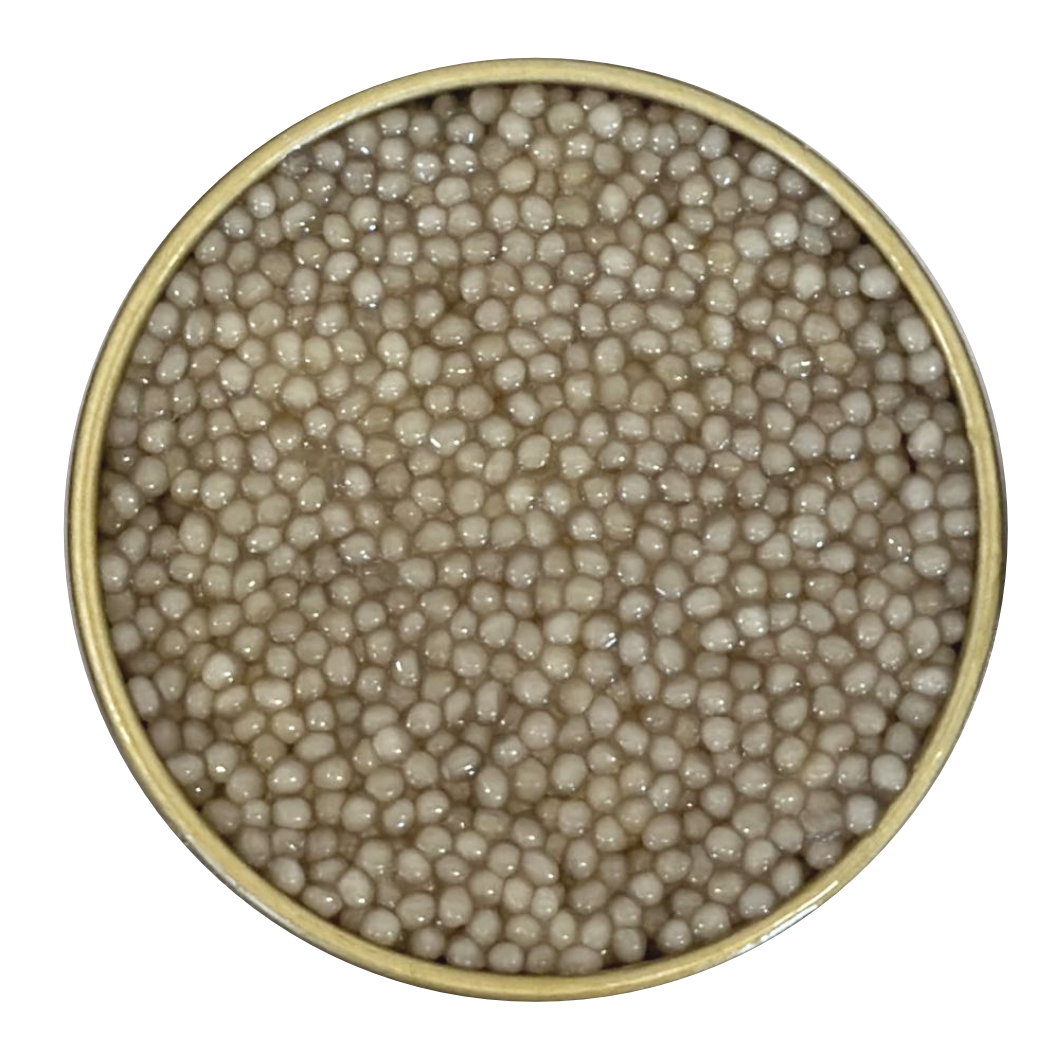
„Albino“ is not the name of a distinct species of sturgeon, but a rare genetic trait in which the fish has significantly reduced pigmentation. As a result, the caviar may be golden, creamy or almost white. It is visually recognisable, but its origin must again be linked to the specific species of fish.
At AEmillius, we offer rare albino varieties with creamy, almost white grains. The visual effect is striking, but it does not detract from the purity of the flavour, texture, freshness and origin.
This is also a good example of why the term „black caviar“ describes the category and tradition, rather than necessarily the literal colour of each grain.
And what should we know about the American paddlefish?
Selections of North American sturgeon-like fish are also available on the market. Paddlefish, or the American paddlefish, is a close relative of the sturgeons in the order Acipenseriformes, although it belongs to a separate family Polyodontidae.
Its roe usually consists of smaller grey grains and has a lighter, cleaner flavour. AEmillius has presented Bulgarian paddlefish roe in a tasting setting, where its light grey hue and delicate profile are used in original gourmet pairings.
This type of product could be an interesting option for people who are already familiar with the classic Baerii and Ossetra and wish to compare a different character.
It is important to check the exact variety on the label, rather than relying solely on the general term „black caviar“.
How does the type of fish affect the flavour?
The species influences the size, skin, colour and basic flavour profile. Siberian sturgeon often has an oily and approachable flavour. Russian sturgeon is characterised by a firmer texture and a more complex, lingering character. Beluga is recognised by its large, delicate grains and fine tenderness.
But the species is not the only factor. The final result is influenced by the water, the feed, the conditions on the farm, the age of the fish, the maturity of the eggs, the time of harvest, the amount of salt, the expertise in processing, transport and storage temperature.
That is why we would not define quality simply by asking „which fish is it from?“. The more accurate question is:
„What sort of fish is it, where does it come from, and how did it end up with me?“
How can we identify a reliable source?
Check the full product name, the type of fish and its Latin name. In the international trade in sturgeon caviar, CITES labelling plays a key role in ensuring traceability.
The code on the original packaging contains standardised information relating to the type, source, country of origin, year and the processor or repackaging facility.
A reliable product must provide clear information on its ingredients, origin, storage conditions and use-by date. Avoid products that use only terms such as „luxury“, „imperial“ or „premium“ without specifying the type of fish. The trade name may describe a selection, but it does not replace the biological origin.
At AEmillius, our philosophy is „black caviar, no compromises“. We source products from Bulgaria and carefully selected producers from other countries, assessing not only the popularity of the variety but also the actual quality of the product.
Which fish produces the best black caviar?
There is no one-size-fits-all answer. The best caviar is the one that suits your taste and is of impeccable freshness and clear provenance.
Someone who prefers a mild, buttery flavour might choose Baerii. Those who favour firmer grains and a more complex flavour will probably opt for Ossetra. For large, delicate grains and a rare experience, Beluga is the natural choice.
Start by comparing rather than ranking. Try small amounts of two or three varieties at the same temperature and without strong accompaniments. Observe the grains, the initial flavour and the finish. That way, you’ll discover not just „the most expensive“, but the caviar that’s right for you.
Frequently Asked Questions
Which fish is genuine black caviar made from?
Genuine black caviar is produced from the eggs of sturgeon: Siberian sturgeon, Russian sturgeon, beluga and other species.
Is a beluga a fish or a type of caviar?
Beluga is caviar from the beluga sturgeon, Huso huso. The term refers to the origin, not merely to quality or size.
Is every black fish roe genuine caviar?
No. The dark colour is not proof. What matters are the species, the Latin name, the origin and the label.
Which caviar is best for a first tasting?
Baerii, made from Siberian sturgeon, is often a good first choice due to its mild, buttery flavour. Ossetra is ideal for those looking for a firmer texture and a more complex flavour.
Can genuine black caviar be golden or almost white?
Yes. The colour varies depending on the species and characteristics of the fish. Albino varieties can be cream-coloured or almost white.
Conclusion: Black caviar starts with the sturgeon
Genuine black caviar comes primarily from sturgeon. The Siberian sturgeon produces the distinctive Baerii, the Russian sturgeon is the source of Ossetra, and the beluga sturgeon produces Beluga. Hybrids may combine the characteristics of different species, whilst albino caviar demonstrates that this category is not always literally black.
Knowing about fish changes the way you choose and taste it. It helps you distinguish the genuine product from the general term „fish roe“, understand the label and discover the flavour that suits you best.
For us at AEmillius Caviar, provenance is not just a technical detail. It is the foundation of trust. And when you know what’s in the tin, every caviar pearl tells a much richer story.