

The short answer is: Black caviar comes from sturgeon, whilst red caviar comes from salmon. Everything else that distinguishes them stems from this single fact: the size of the pearls, their price, their flavour, the way they are served, and even the laws governing trade in them.
Both products have the same word in their names and occupy the same shelf in the supermarket. That is where the similarities end. They are made from different types of fish, using different production methods, in different quantities, and are eaten in different ways.
If you’ve ever wondered why one costs as much as a dinner for two and the other as much as a coffee, the answer is in this article. And it isn’t „because one is more luxurious“.
Which fish do black and red caviar come from?
Black caviar is produced from the roe of female sturgeon, family Acipenseridae. This is an ancient group, whose members have existed on the planet for over two hundred million years.
Red caviar comes from salmonids, family Salmonidae: salmon, chum salmon, pink salmon, trout. These fish are far more widespread and reproduce on a scale that sturgeon cannot match.
There is also a terminological nuance that confuses many people. In Bulgarian, both products are called „haiver“, whereas in English the black variety is known as „caviar“ and the red variety as ‘salmon roe’. Strictly speaking, the term ‘hayver’ refers only to sturgeon roe, whilst everything else is simply fish roe. In commercial practice, however, the two names have been used interchangeably for decades, and there is no point in trying to fight the language.
The difference in biology is the whole reason for the difference in price. One fish is rare and slow-growing. The other is not.
Why is black caviar so much more expensive?
Because of the time involved. Female sturgeon only reach harvestable size after many years of rearing, during which they must be fed, monitored and kept in clean water.
Salmon reach maturity incomparably faster and produce large quantities of roe every year. They are also caught commercially, whilst Wild sturgeon fishing is prohibited and all legal black caviar comes from certified aquaculture.
Add to this the fact that each sturgeon produces caviar only once, rather than every year like a well-managed salmon stock. The result is a difference in supply that no technology can bridge.
There is also a third cost that is rarely factored into the buyer’s calculations: regulation. Every batch of black caviar undergoes documentation, certification and traceability procedures, which cost the producer both time and money. Red caviar does not carry this burden. Part of the price difference at the counter is simply the cost of being able to prove where the product comes from.
How do they differ in appearance?
In terms of both colour and size, both differences are visible from a distance.
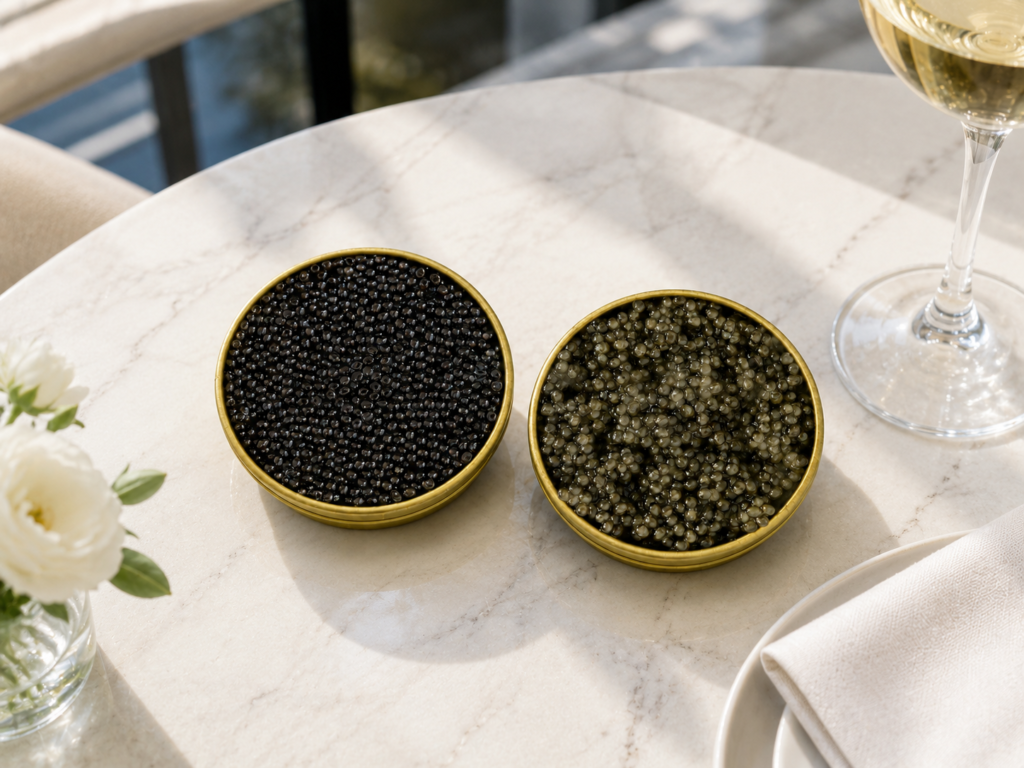
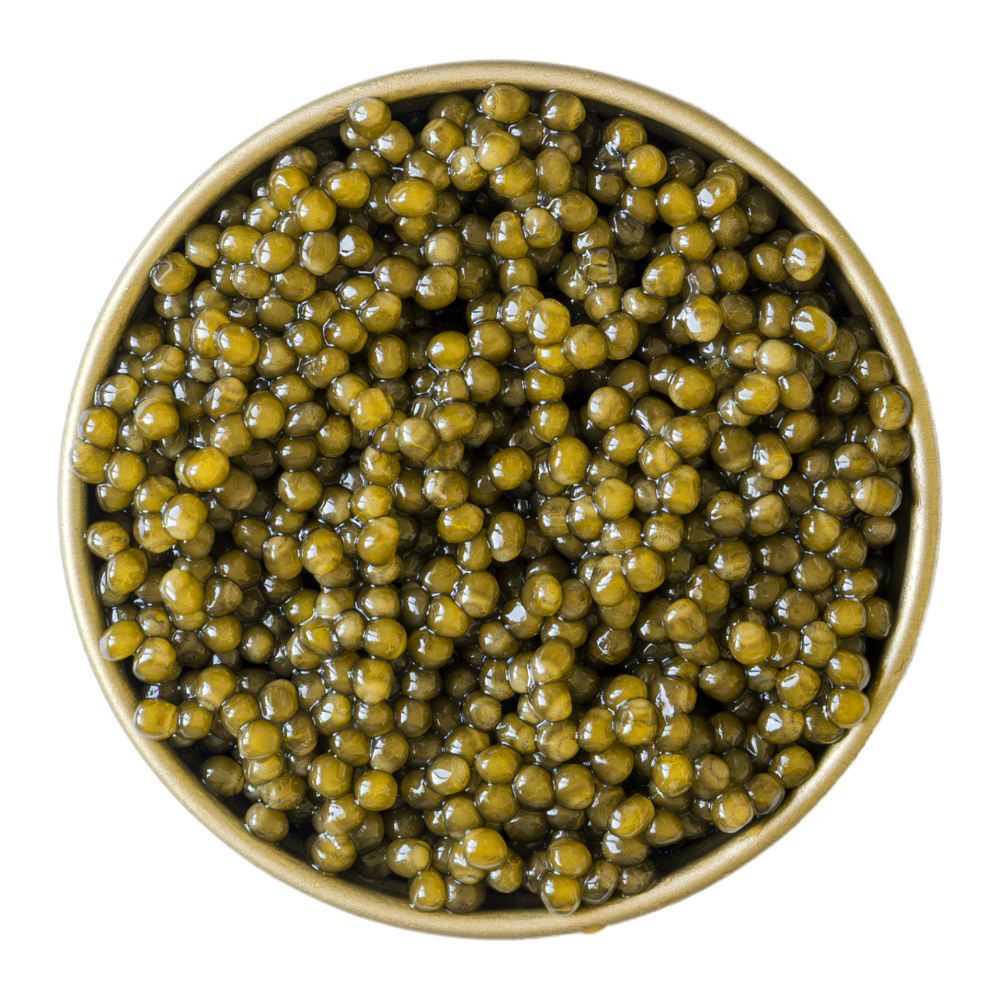
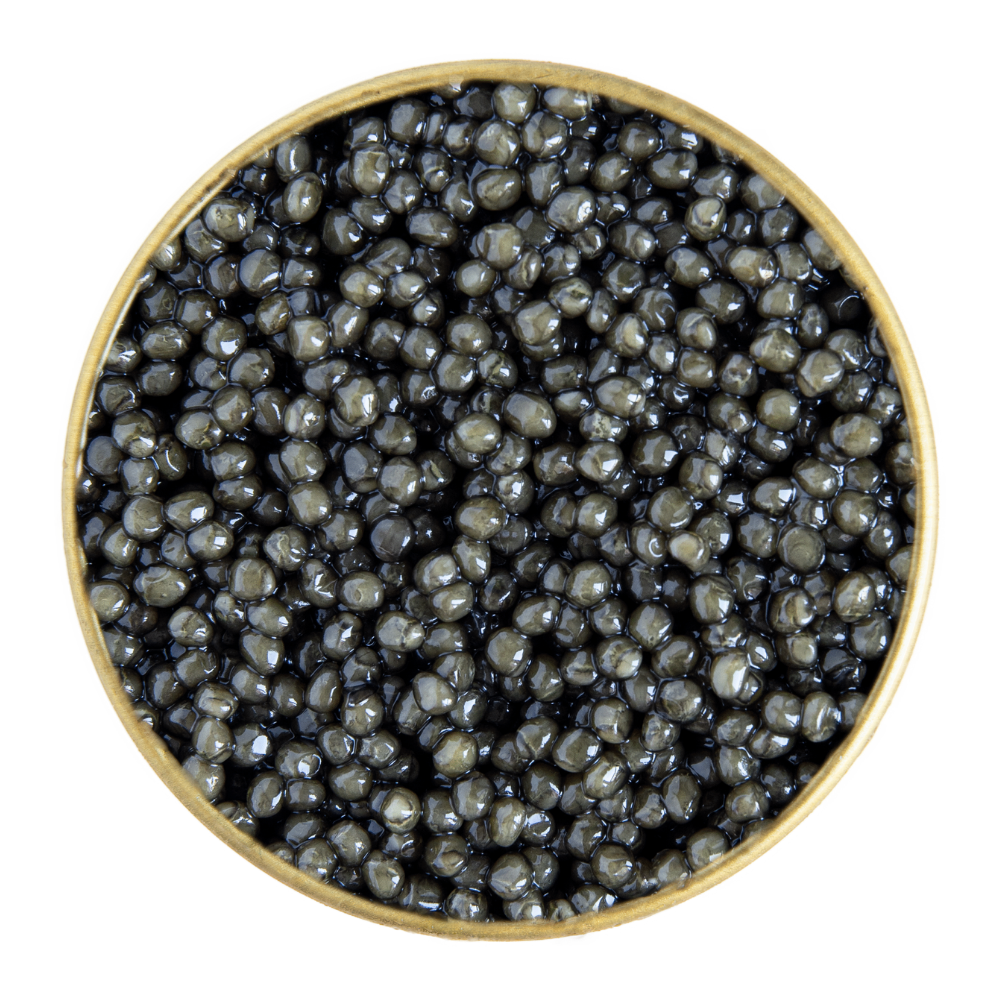
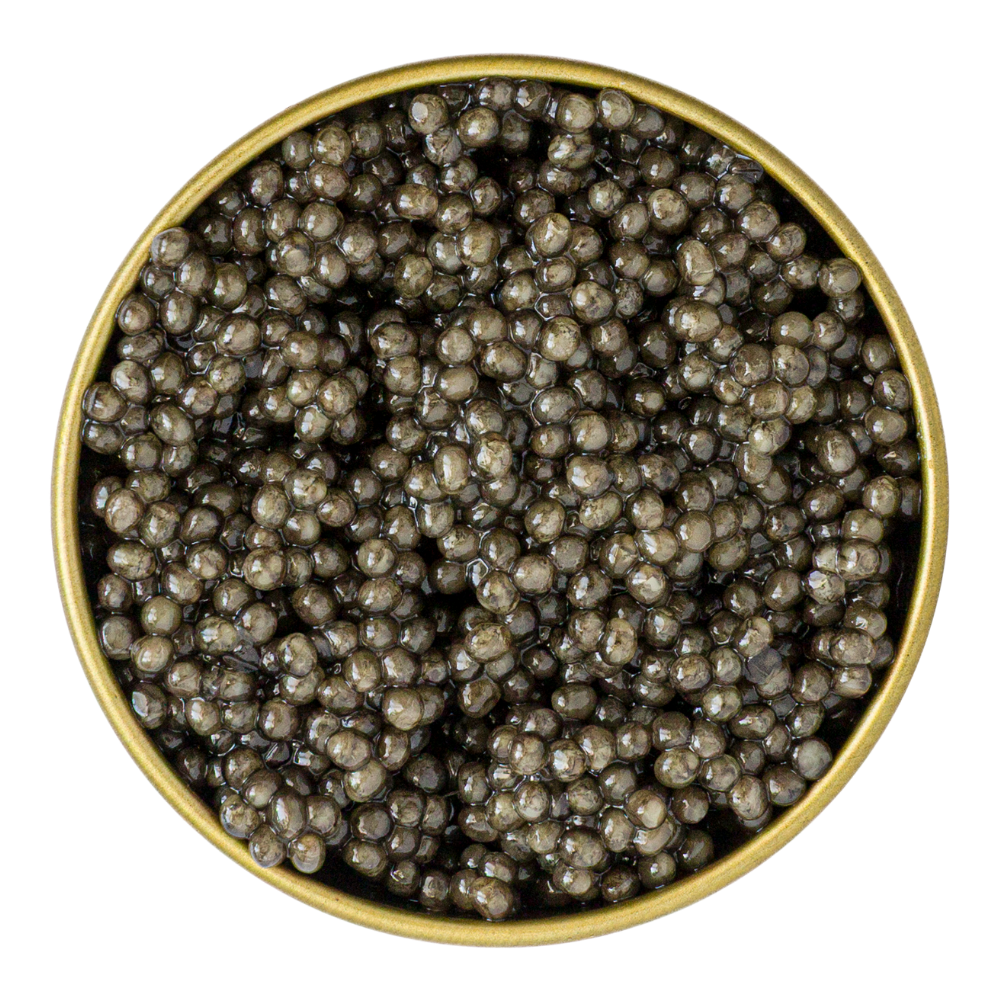
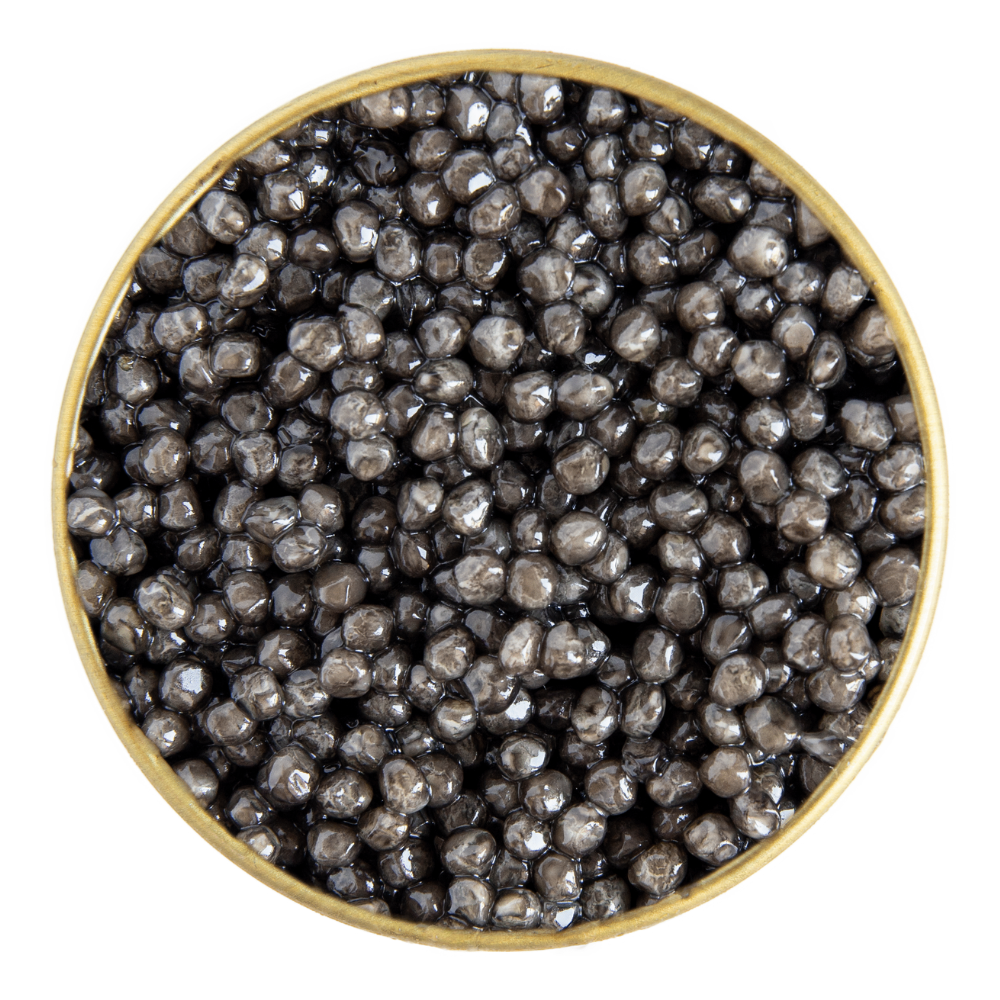
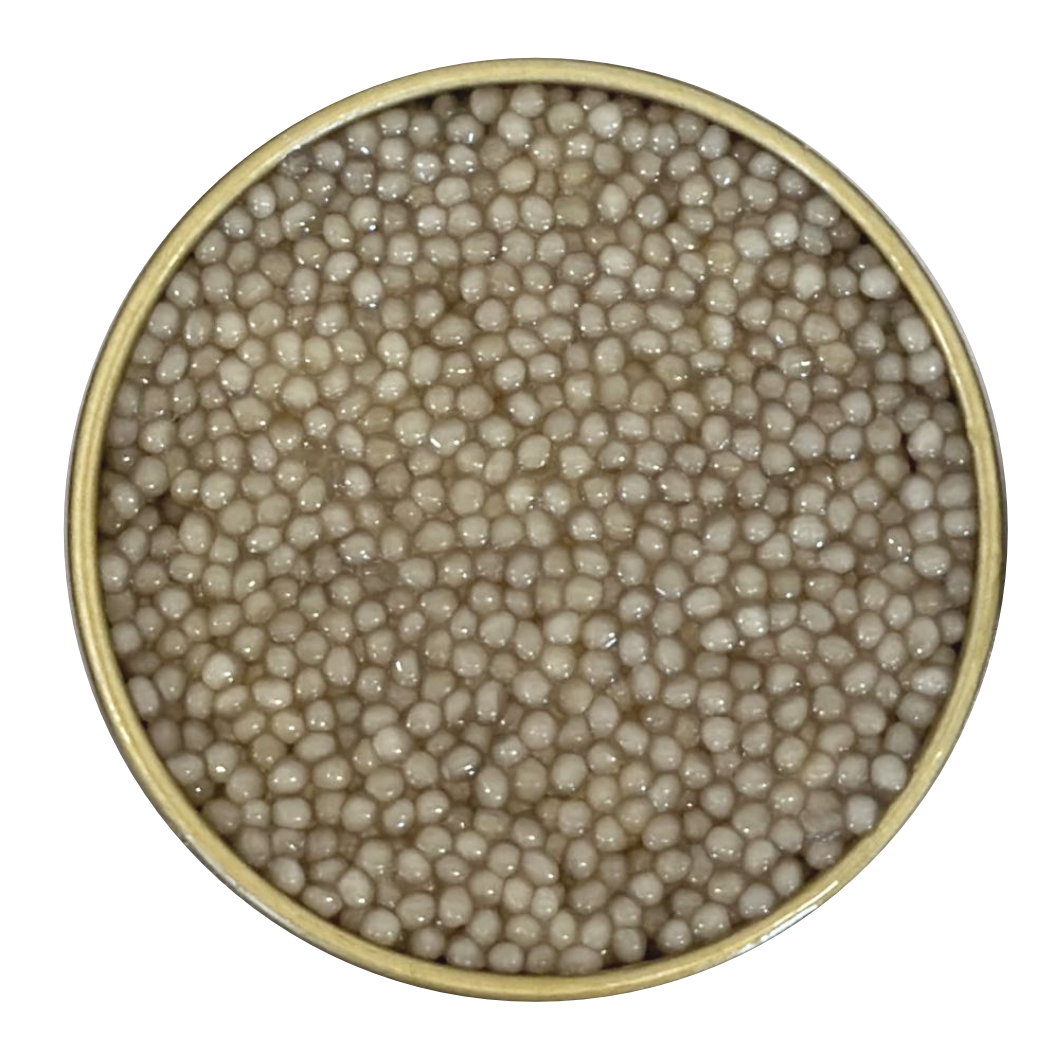
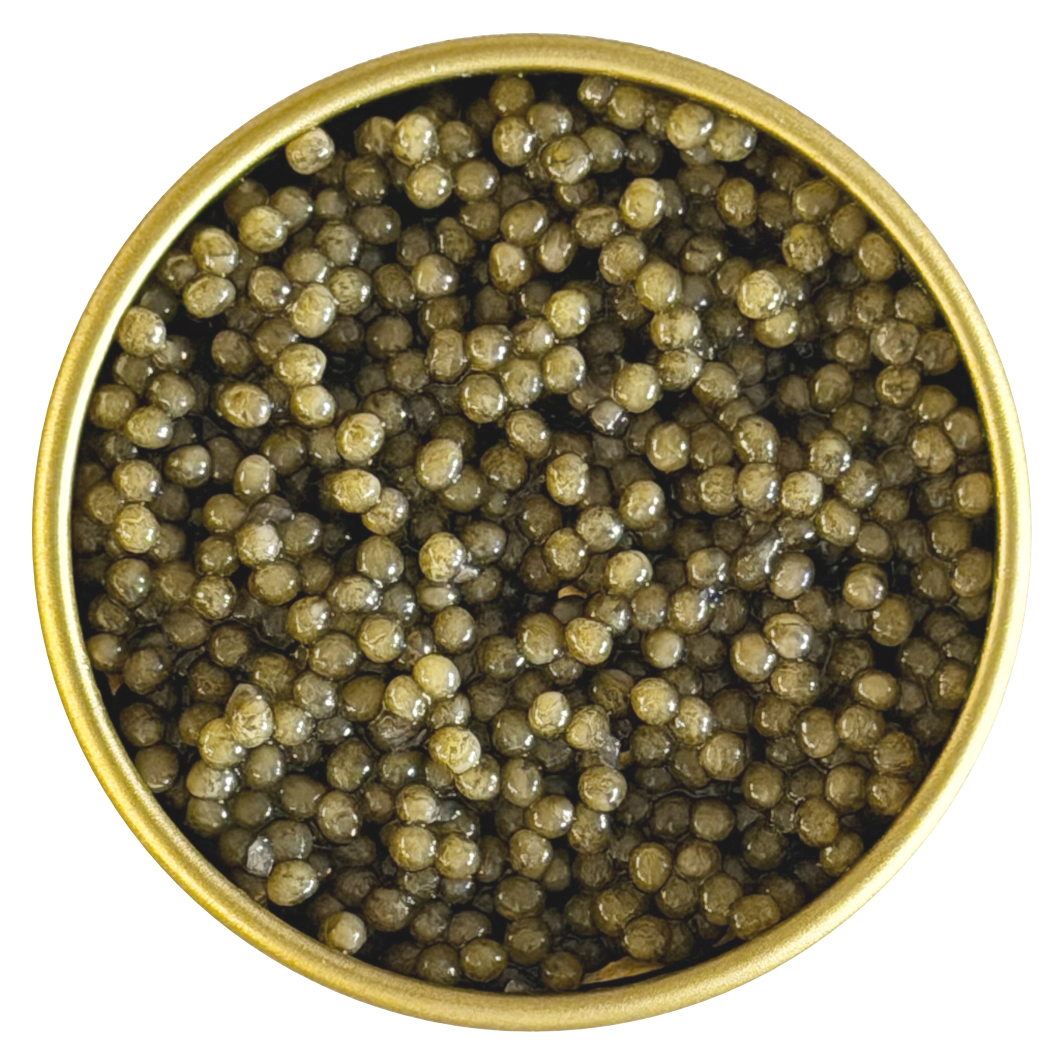
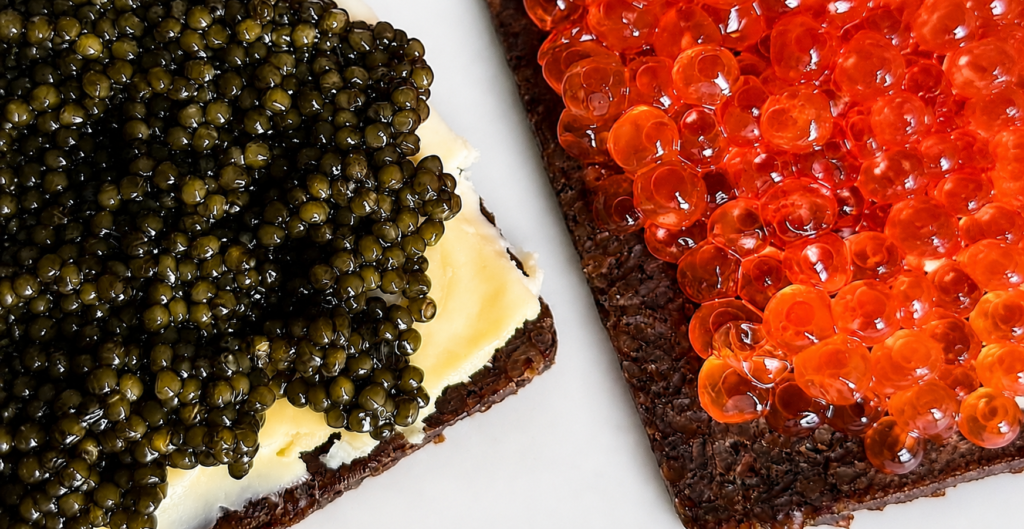
- Colour. Black caviar ranges in colour from light grey through olive and brownish to almost black. Red caviar is orange to deep red, and is almost always bright in colour.
- Transparency. Red caviar pearls are transparent, and an orange centre is clearly visible within them. Black caviar pearls are translucent or opaque.
- Size. Red caviar usually has larger pearls than most types of black caviar. The exception is the beluga, whose pearls are the largest in the world of black caviar.
- Sheen. Black caviar has a soft, understated sheen. Red caviar shines more brightly.
How do they differ in taste?
This is where the difference is greatest and most important in practice.
Black caviar is understated. Its flavour is clean and delicate, with a long finish that unfolds gradually. The saltiness is present but not overpowering. Different varieties offer different nuances: mild and buttery when the Siberian sturgeon, the scent of the open sea in Russian sturgeon, rich and complex in the case of beluga.
Red caviar is straightforward. It is distinctly salty, with a clearly discernible fishy character and a flavour that comes on quickly and fades just as quickly. The pearls burst more noisily and release more liquid.
Neither is better in an absolute sense. They simply speak with different volumes.
There is also a practical implication to this distinction. Red caviar is recognisable from the very first bite and rarely holds any surprises afterwards. Black caviar takes a few bites to reveal itself: the first is an introduction, the second is an appreciation, the third is a delight. People who try black caviar once and remain unimpressed have almost always stopped at the first bite.
Is the texture any different?
Yes, and that’s a difference that many people notice before they even taste it.
Black caviar pearls have a thinner membrane. They burst with a slight resistance between the tongue and the palate, leaving a velvety sensation. Red caviar has a thicker membrane, which bursts more noticeably and releases more liquid all at once.
That is precisely why black caviar is eaten in small mouthfuls without chewing, whilst red caviar is better suited to being part of a larger mouthful.
The difference in the membrane also explains why the two products behave differently when handled. Red caviar can withstand being stirred, spread out and left on a cold plate. Black caviar begins to lose its shape with any unnecessary movement, so it should be scooped up once and served immediately. The spoon should be inserted shallowly and from the bottom upwards, rather than being thrust in and twisted.
Which of the two is eaten on its own and which is eaten as part of a combination?
The finest-quality black caviar is eaten on its own. Any additions detract from the product you have paid for. The maximum is warm pancake with a little butter.
Red caviar is perfect for pairing. It works well in a sandwich, on a slice of bread with butter, in a salad, or as part of a starter. Its distinctive flavour holds its own against other flavours because it is strong enough to stand out.
There is one rule that applies to both and is constantly broken: neither should be cooked. Heat causes the pearl’s membrane to shrink and irreversibly alters the flavour. Red caviar is placed on top of a warm pancake, not inside it. Black caviar goes on a warmed blini at the very last moment, not under the grill.
This is the practical difference that determines how you will lay the table.
Are the cutlery and the way the food is served any different?
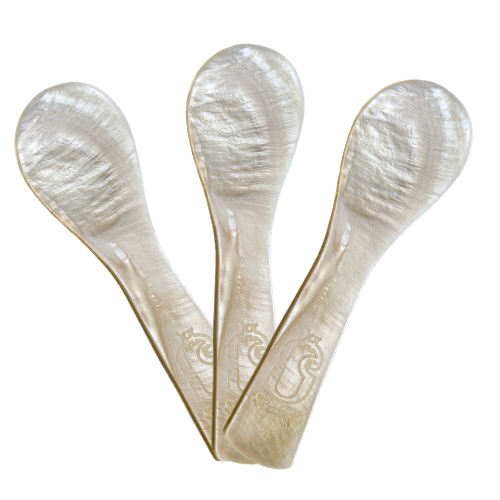
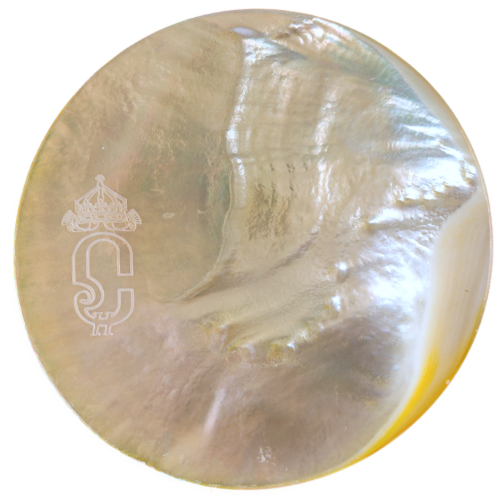
Black caviar is served chilled, on a bed of crushed ice, with a mother-of-pearl teaspoon, bone or glass. The box is taken out of the fridge just before serving.
Red caviar is incomparably less fussy. A plain spoon will do the trick, it’s more forgiving when it comes to temperature, and no one has ever been disappointed by a slice of bread spread with it.
If you’re serving black caviar for the first time, a mother-of-pearl spoon is the little detail that can transform the whole evening. You can find all the details in our article on the subject How to serve caviar properly.
The portion size also varies. Red caviar is served generously, as this is part of its character. With black caviar, the measure is different: a small teaspoon per person for tasting is quite sufficient to appreciate everything the product has to offer. A full plate here does not indicate generosity, but rather that someone has not understood what it’s all about.
Is there a difference in the nutritional profile?
Both products are rich in high-quality protein, omega-3 fatty acids, vitamin B12 and various trace elements. Broadly speaking, they belong to the same food category.
Both are savoury products, which means that the sodium content is worth bearing in mind for people who are monitoring their sodium intake. The differences between specific batches are often greater than the differences between the two types, so the generalisations made here are less useful than they appear.
A point worth clarifying to avoid disappointment: neither is a dietary supplement, and nobody eats caviar for its vitamins. The portions served are small, and the reason for eating it is quite different. The nutritional profile is a nice bonus, not a reason to buy it.
If you’re interested in the topic in more detail, we’ve written about it in the article on black caviar for anaemia.
Why are the laws for the two species different?
Because the fish are in very different conditions.
All sturgeon species are protected under CITES, the international convention on trade in endangered species. This means mandatory certification, a standardised label with a code on every package, and full traceability from farm to box.
Salmon are not subject to such regulations. Red caviar is sold as an ordinary food product, without a specific label indicating its origin.
The practical implication: A tin of black caviar without a CITES code is a problem, whereas a tin of red caviar without such a code is perfectly fine. If you’re buying black caviar, it’s worth checking the label just to be on the safe side.
There is also a flip side to this difference, which is rarely discussed. As red caviar is not subject to any special regulations, mislabelling of the species occurs more easily and more frequently. Chum salmon sold as salmon is an everyday occurrence. Regulation is strict for black caviar, but it is precisely this that gives the buyer a means of verification, which simply does not exist in the case of red caviar.
Which one keeps for longer?
Both are fresh, lightly salted products that are kept in the fridge, and both have a short shelf life once opened.
Black caviar will keep for 2 to 3 days after opening, provided it is kept tightly sealed in the coldest part of the fridge. Red caviar is somewhat more forgiving due to its higher salt content, but it too is not a product to be left lying around.
One thing is absolutely the same for both: neither of them freezes. The ice crystals tear the membrane from the inside, and once thawed, the pearl is no longer a pearl. With red caviar, the damage is less noticeable because its texture is coarser, but the process is essentially the same.
The rule is the same for both: open them just before you’re going to eat them. You can find more details about black caviar in the article on the subject how to store black caviar.
Can red caviar be used as a substitute for black caviar?
No, and that’s not snobbery. They’re simply different products with different purposes.
Red caviar is excellent wherever a salty accent with a bold flavour is required: on an egg, in a starter, or on a festive table where there are many dishes. Black caviar is for that moment when everything else takes a back seat and only one bite remains.
Attempts to replace one with the other usually prove disappointing in both cases. Red looks garish where black should be. Black looks shabby where red should be.
The opposite approach deserves a word of its own. Using black caviar in a recipe designed for red caviar is the most expensive way to taste nothing at all. If you’re ever tempted to „enrich“ a salad with a spoonful of black caviar, consider how much of it will actually reach your palate – and in what company.
Which one should we choose for a specific occasion?
- A big party with lots of guests: Red caviar for the table, black caviar for when you raise a toast.
- A romantic dinner for two: black caviar, plain, without any accompaniments.
- Gift: black caviar. It’s something you remember.
- Daily breakfast: Red caviar on a slice of bread with butter is a perfectly respectable choice.
- First tasting of black caviar: Start with a gentle profile, for example Baerii Gold Æmillius Caviar.
The whole selection of black caviar is sorted by type, if you want to compare the profiles before making a decision.
What are the most common misconceptions about the two species?
- „Red caviar is just black caviar, only a different colour.“ Different families of fish, different products.
- „The black one is saltier because it’s more expensive.“ On the contrary. High-quality black caviar is lightly salted.
- „Larger pearls are a sign of better quality.“ The size depends on the type and age of the fish, not on its quality.
- „Both are eaten with the metal spoon from the drawer.“ With black caviar, the pearlescence is part of the experience.
- „Black caviar is black.“ It is grey, olive, brownish or almost black, depending on the species.
What should we bear in mind regarding the difference between black and red caviar?
Sturgeon versus salmon. Rarity versus abundance. Restraint versus directness. Three pairs of words from which everything else follows, including the price.
It’s not worth ranking them in order of merit. Red caviar is an honest, delicious food that doesn’t pretend to be anything more than that. Black caviar is something else: not so much a food as a reason for the meal to pause for a moment.
If, however, you need a practical guide, here it is. Ask yourself what you want from the table. If you want abundance and a flavour that makes an immediate impression, choose red. If you want a moment when everyone falls silent, choose black. Both are worthy aspirations, they’re just not the same thing.
If you’ve only tried one so far, the other one is waiting for you. And as we always say to anyone who’s on the fence: it’s the first bite that changes your mind, not the description in the article. Who are you treating?