

The short answer is: the real one black caviar is recognised first by its documentation and only then by its taste. The label bearing the international labelling code says more than any tasting ever could, because it can be verified, whereas a tasting experience cannot.
That’s an awkward answer. Everyone would prefer to believe that they can tell the real thing by taste, just as they can recognise a fine wine. The truth is that a well-made imitation can fool even the most experienced palate for a few seconds, whereas a missing code never fools anyone.
That is why this article begins with what is read and ends with what is felt. In that order.
What does „fake black caviar“ actually mean?
This term encompasses several very different things, and it is worth distinguishing between them.
- Coloured caviar from another fish. Caviar from cod, herring, flounder or pike, dyed black and sold as sturgeon caviar. Technically, it’s food, but it’s not what you’re paying for.
- Artificial pearls. A product made from seaweed or gelatine with flavourings. It looks similar, but breaks down differently.
- A species that has been incorrectly labelled. Genuine sturgeon caviar, but not of the variety stated on the tin. Baerii, sold as beluga, is the most common case.
- Caviar of unknown origin. A genuine product of unknown origin, with no certification. The problem here is not the taste, but its legality.
Only the last two cases require expert assessment. The first two are relatively easy to identify.
What is the most reliable way to check authenticity?
The labelling code on the packaging. The Convention on International Trade in Endangered Species, known as CITES, requires every package containing sturgeon caviar to bear a standardised, unique label.
This code contains, in compressed form, information on the species, origin, country of origin, year of harvest, processing plant number and batch number. It is not a decoration, nor is it a marketing ploy. It is the product’s licence to exist legally.
A box without such a label is not a „cheaper alternative“. It is an undocumented product, and that is all you need to know about it.
Also note the way the label is attached. A properly attached label is designed to tear when the box is first opened, precisely to prevent the packaging from being reused. If you see a label stuck to the side or top in such a way that the lid can be lifted without affecting it, this in itself is cause for concern.
What is CITES and why is it important for caviar?
CITES is the international agreement that regulates trade in endangered species. All sturgeon are protected under this agreement because their wild populations are in a critical state.
In practice, this means two things. Firstly, Wild sturgeon fishing in the River Danube is prohibited, and anyone who offers you „caviar from a Danube fisherman“ is either selling contraband or lying. Secondly, legal black caviar comes exclusively from certified aquaculture, where the fish are reared on a farm under controlled conditions.
The company behind Æmillius Caviar, Nuters Ltd is the first Bulgarian company to hold its own CITES certificate for exports outside the European Union. This is not a point of pride, but an explanation of why the documentation on our boxes stands up to scrutiny wherever it is checked.
It is worth understanding the logic behind the system, as it explains why the code is so difficult to tamper with. Each batch is traced from a specific farm, through a specific processing plant, to the specific package. It is a closed loop: the quantity that goes out must match the quantity that went in. A product of unknown origin cannot be inserted into the chain midway without upsetting the balance somewhere.
Bulgaria occupies a strong position within this system. The country is one of Europe’s leading producers and exporters of black caviar, with aquaculture operations utilising clean water and sustainable practices. This is no accident, but the result of years of regulated effort.
What does the correct label on a tin of black caviar look like?
Check for these details before you pay:
- The CITES code, stuck on in such a way that it tears when the box is opened.
- The Latin name of the species, for example Acipenser baerii, Acipenser gueldenstaedtii or Huso huso.
- Country of origin and the year of harvest.
- The number of the processing plant.
- Net weight, use-by date and storage temperature.
- Trader identification, who is responsible for the product.
The absence of a Latin name is particularly telling. A seller who simply writes „black caviar“ and nothing else either does not know what they are selling, or they do know but prefer not to share that information.
Could the price be an indication that the caviar isn’t genuine?
It might be – and this is the crudest, but most reliable filter.
Sturgeon grow slowly. It takes years of feeding, monitoring and treating a female before she reaches harvesting age. This simple maths means it is impossible to produce a cheap product. When an offer is drastically lower than everything else on the market, the explanation is almost never „direct from the producer“.
The reverse warning applies here too: a high price proves nothing in itself. It is easy to set. The documents are not.
Also be wary of how the offer itself is presented. Urgency is a tactic: „last few items“, „today only“, „stock from a farm that’s closing down“. A legitimate trader sells stock, not panic. When someone pressures you to make a quick decision on a product that requires verification, the rush is part of the product.
What do real black caviar pearls look like?
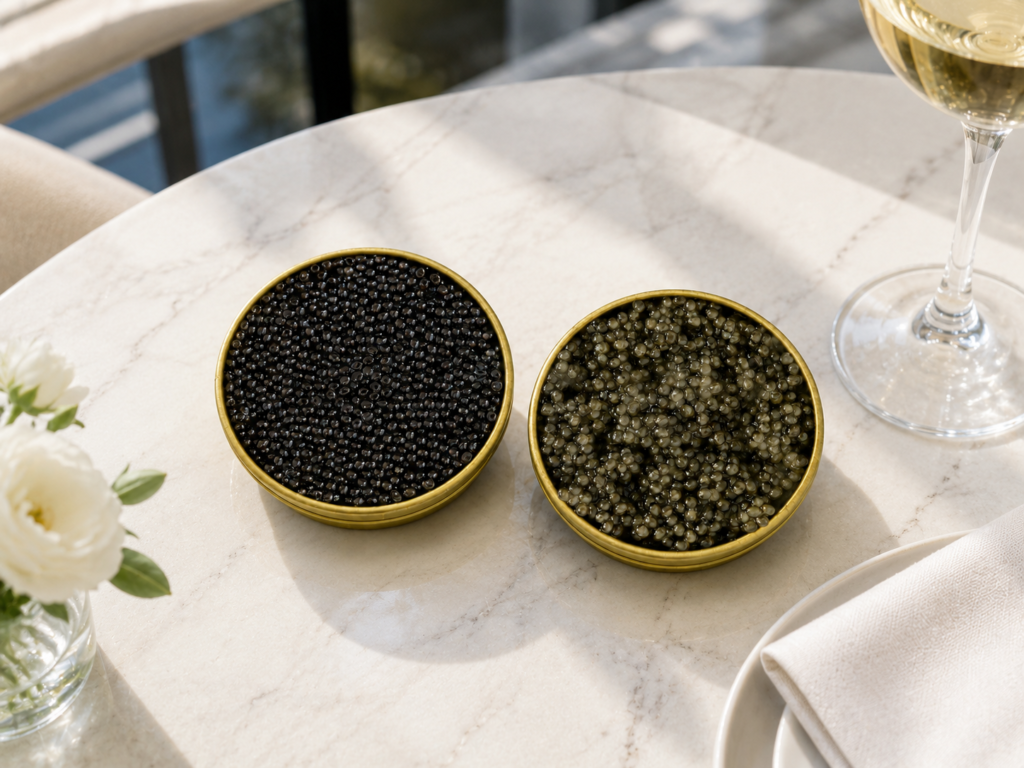
Now we’re moving on to the senses. An open box reveals a great deal to someone who knows what they’re looking at.
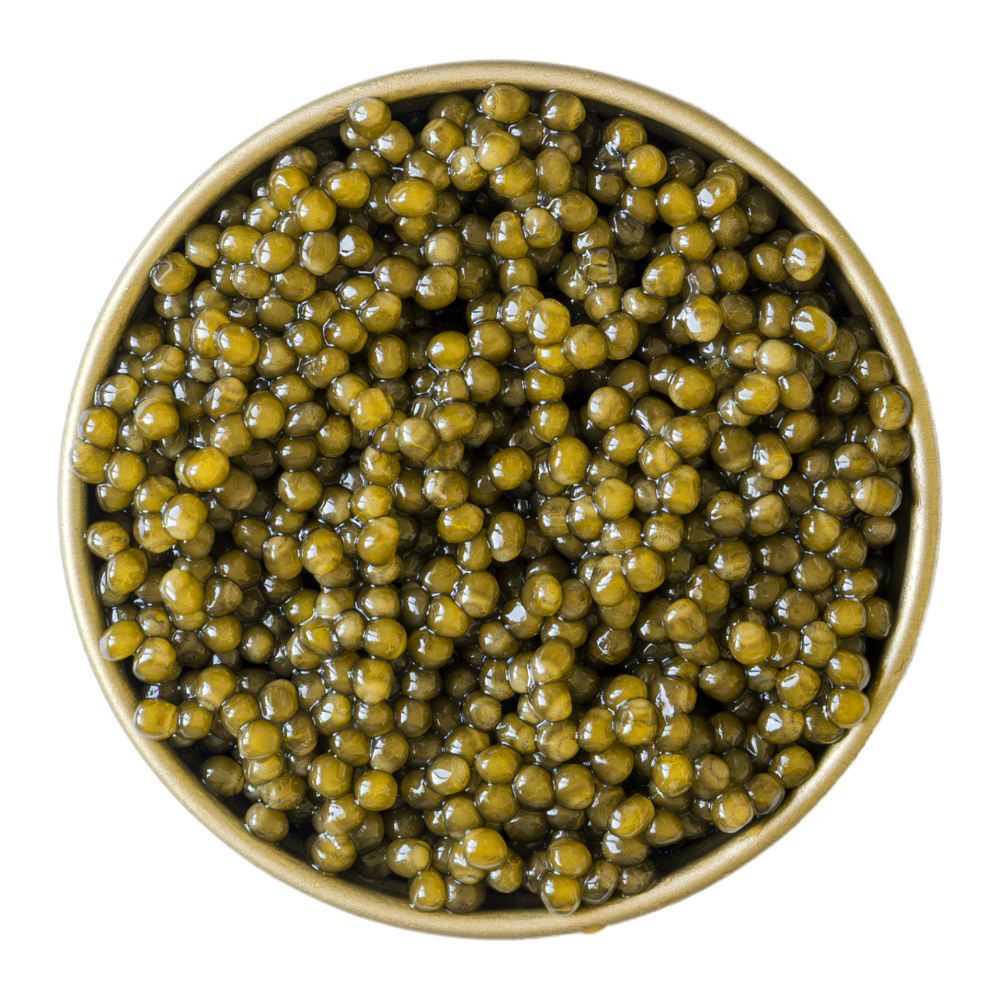
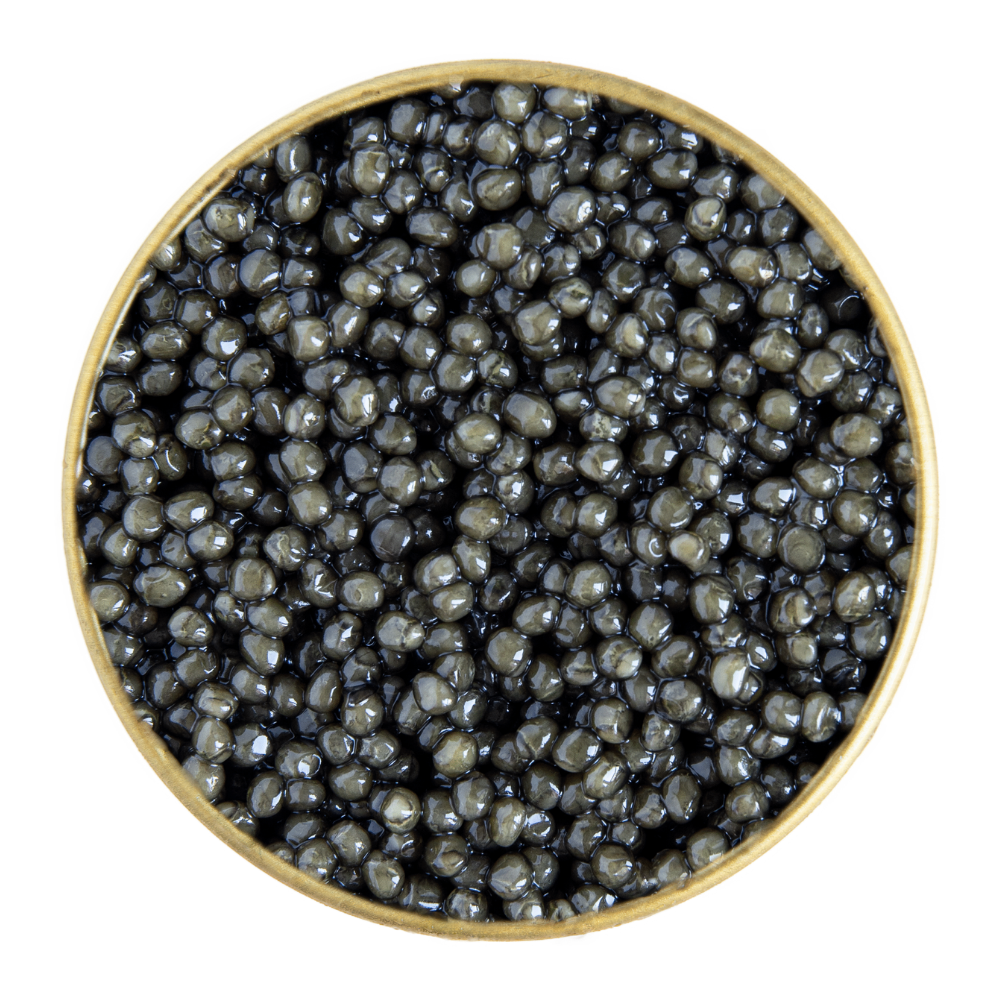
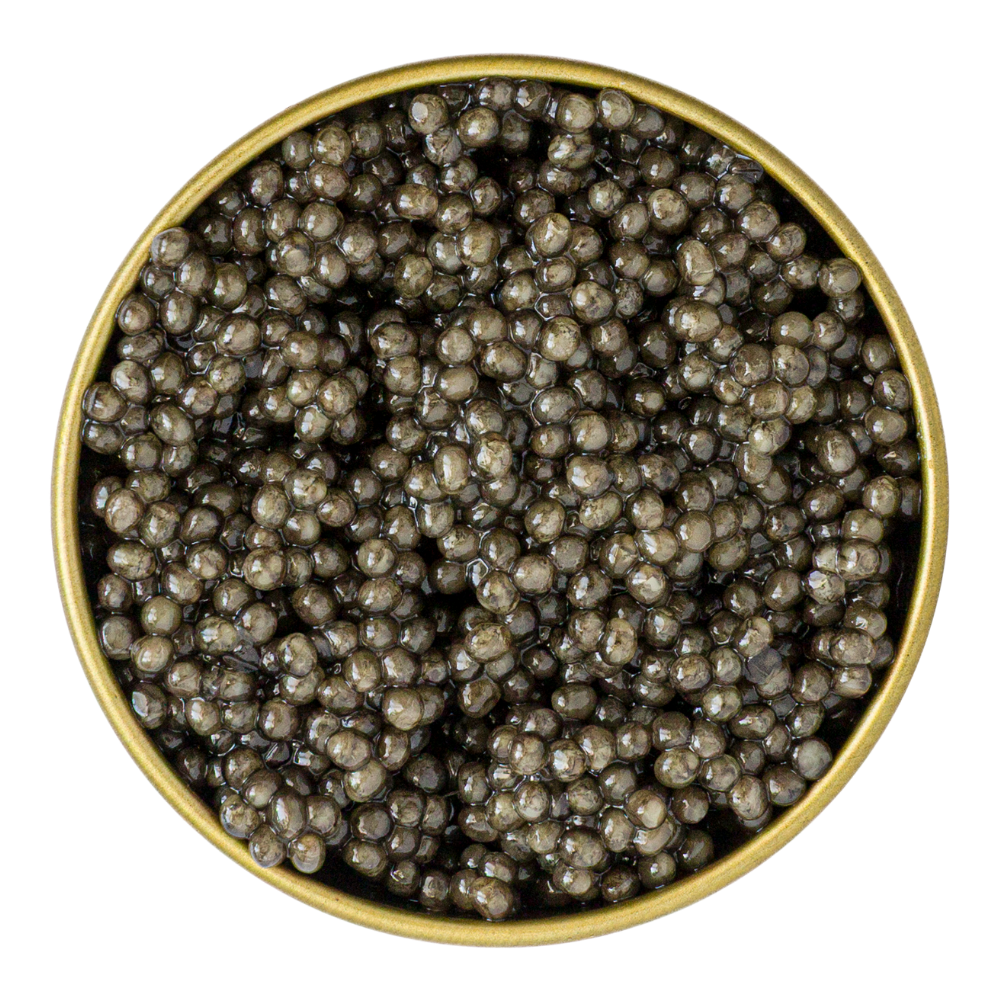
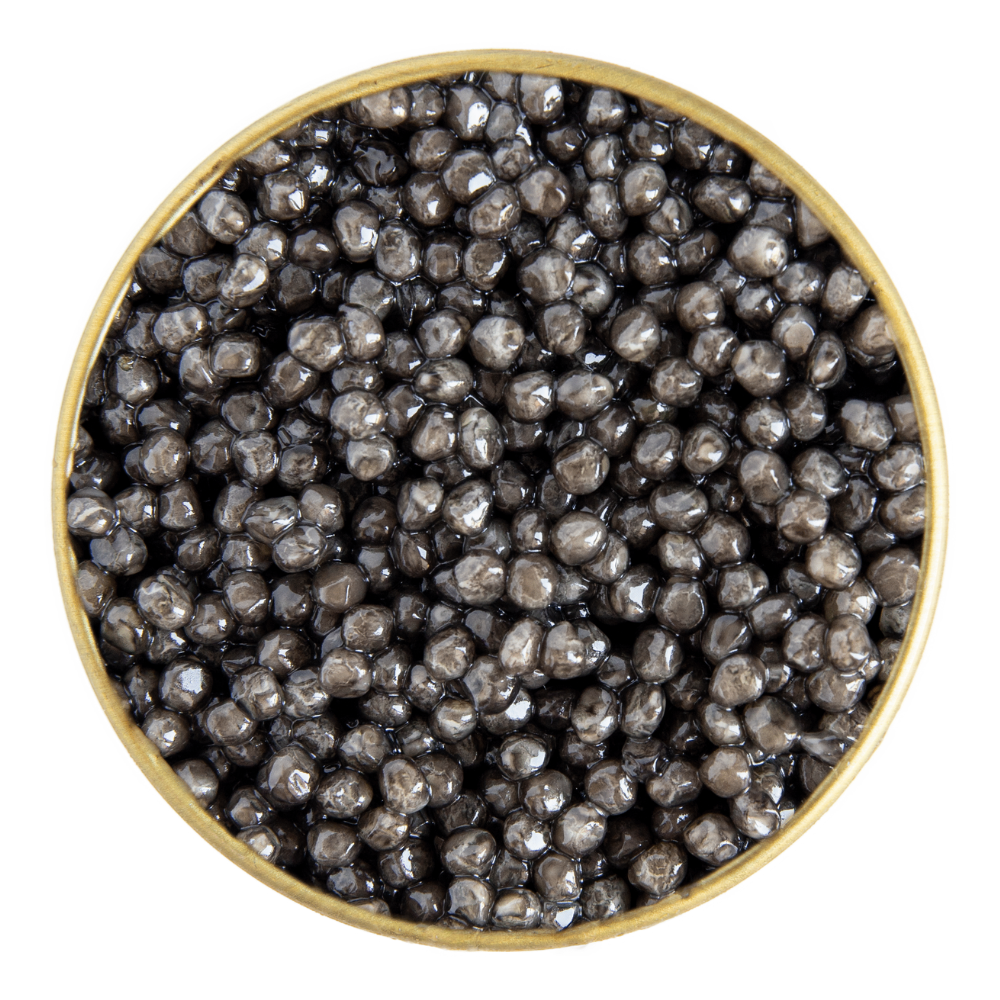
- Individual pearls. Each one is different from the one next to it. A uniform mass is a bad sign.
- A subtle sheen, not a glossy shine. The natural surface has a soft sheen. Spheres that are too shiny and perfectly uniform suggest an artificial product.
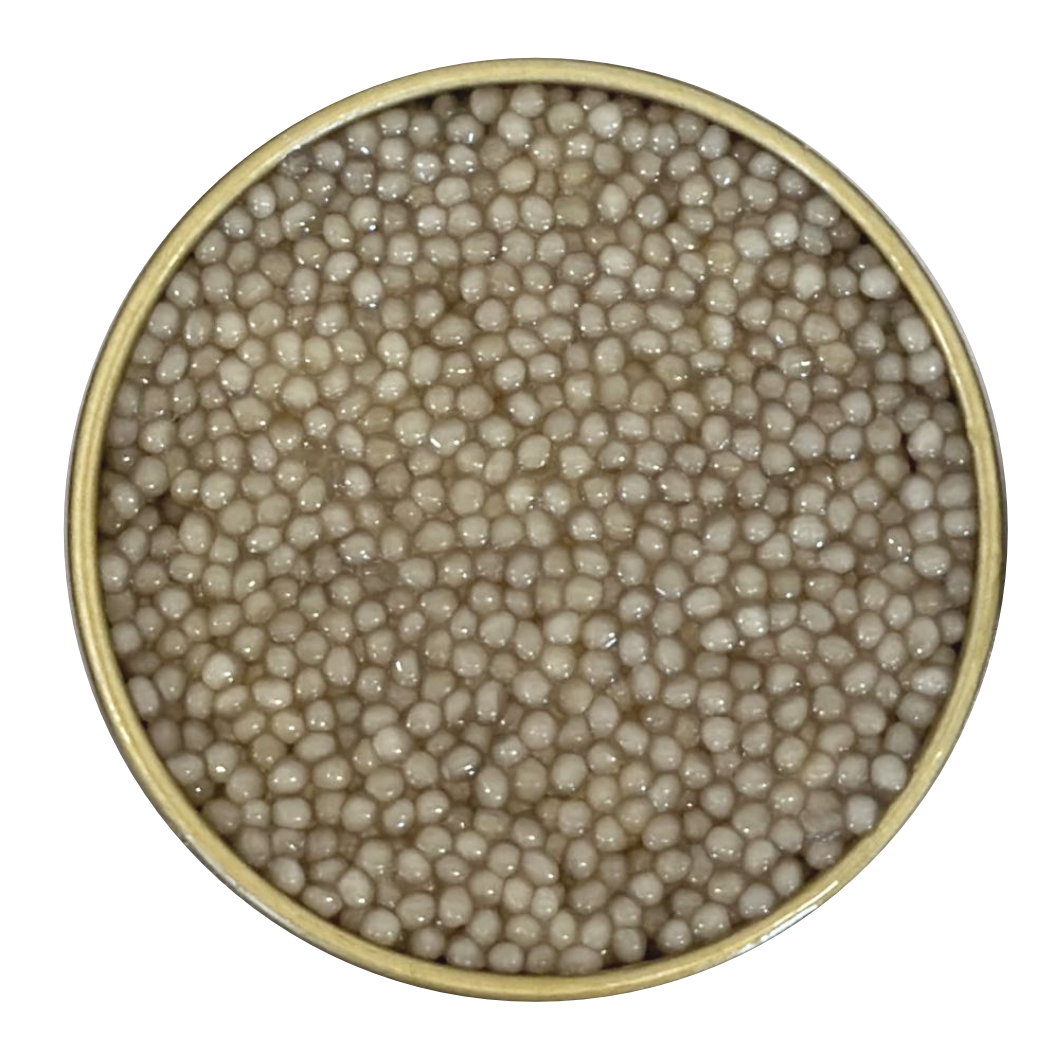
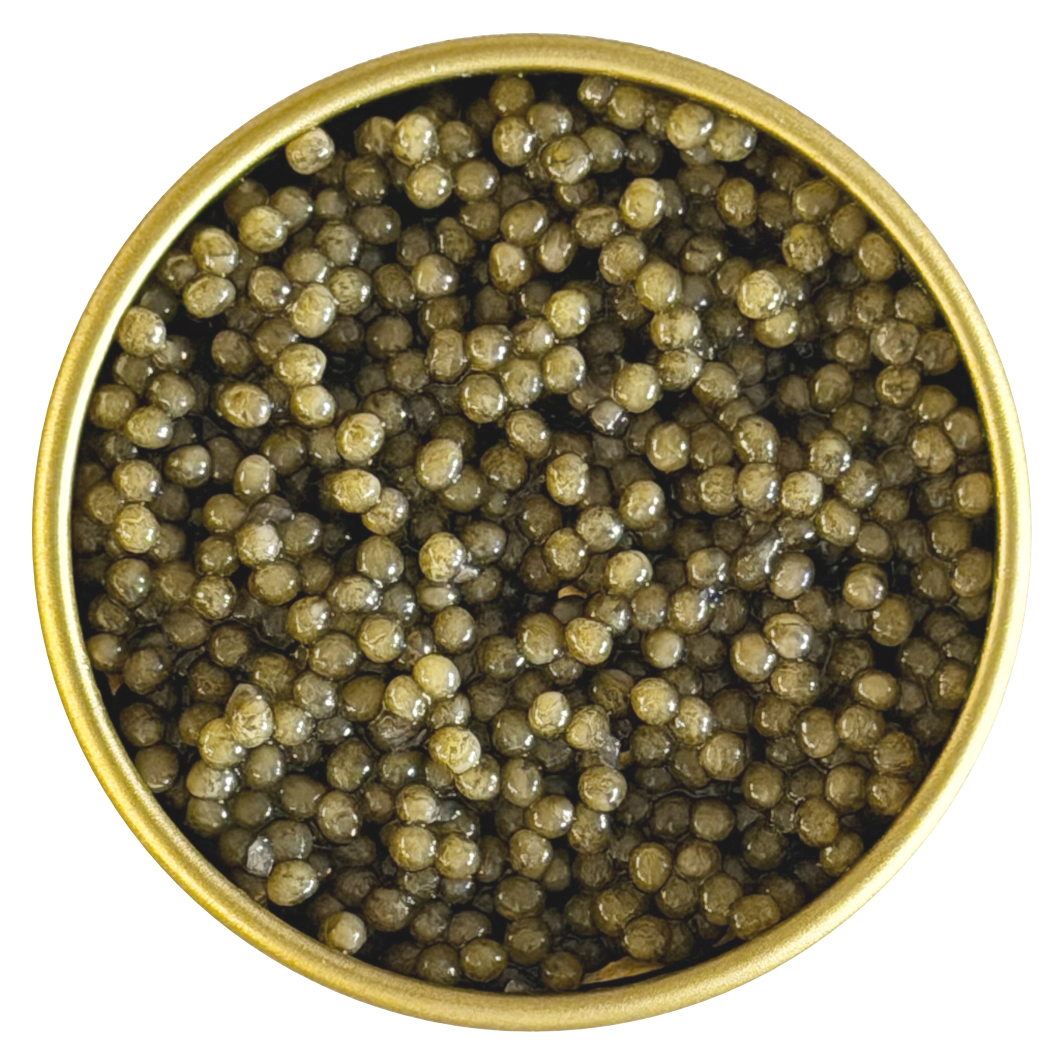
- Variation in colour. Nature does not use just one colour. Pearls that are exactly the same shade of black are suspicious.
- Germinal spot. In good light, you can see a tiny nucleus inside the pearl. Artificial ones do not have one.
- A membrane you can feel. The sweet bursts between the tongue and the roof of the mouth with a slight resistance; it does not melt away immediately.
Is there a home test for fake caviar?
There is one method that works on painted items: the hot-water test.
Place a few pearls in a glass of warm water. If the water turns grey or black, the product has been dyed. The natural pigment in sturgeon caviar does not dissolve in this way. Artificial pearls made from seaweed often dissolve or soften beyond recognition.
There is also a second quick test that requires nothing more than a clean white plate. Scatter a few pearls onto it and examine them closely. Natural caviar leaves the plate clean underneath. Dyed caviar leaves a mark.
However, the tests have clear limitations. They can detect crude counterfeits, but are completely powerless against genuine sturgeon caviar sold under a different name. There is no home remedy for this situation. The only solution is documentation.
How can we tell if black caviar is fresh?
Freshness and authenticity are different matters, but they are assessed together because both are found inside the open box.
- Aroma: Subtle, clean, marine. A sharp, sour or ammonia-like note means the product has gone off.
- Texture: Well-formed pearls that are separate from one another. A clumped mass is a sign of age or improper storage.
- Liquid: A thin layer of clear, natural oil is normal. A cloudy, copious amount of liquid at the bottom is not.
- Cover: A bulging lid or gas escaping when you open it is a reason not to try it at all.
- Aftertaste: Pure caviar leaves a long, pleasant aftertaste. Any bitterness or metallic taste is a sign of a problem.
You can find out more about how to keep your home feeling fresh in our article on the subject how to store black caviar.
How does the real thing differ in taste from the imitation?
Genuine sturgeon caviar has a lingering aftertaste. Imitations usually have a flavour that disappears immediately after swallowing, because they have aroma but no texture.
The second difference lies in the balance. High-quality caviar is lightly salted: the salt is present, but does not dominate. The dyed substitute is almost always very salty, because the salt is what masks its lack of character.
The third factor is the sensation of fat. The natural oils in sturgeon caviar coat the palate softly and gradually. Gelatine-based imitations tend to leave a sticky sensation, which is not quite the same thing.
Are the different types of caviar difficult to replace?
Some are easier than others, and that is precisely what determines where fraud takes place.
Beluga caviar has the largest pearls and the highest price, which is why it is the most common target of mislabelling. Caviar from the Siberian sturgeon, which is an excellent product in its own right, is sold as beluga more often than the market realises.
Russian sturgeon has a distinctive aroma of the open sea, which an experienced taster can recognise, but a novice cannot. And albino varieties are so rare that almost any low-priced offer in this category is worth checking out.
If you’re not sure which profile you’re holding in your hands, the breakdown by type can be found in the article on the flavour profile of black caviar.
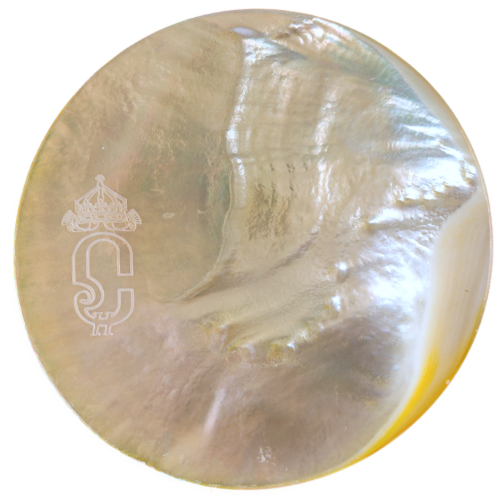
What does the coat of arms of His Majesty Simeon II on the packaging signify?
It refers to a specific, verifiable check, rather than a mere decorative feature.
Our Tsar’s Selection It is authenticated by the personal coat of arms of His Majesty Simeon II. This is authorisation granted to a specific product by a specific person, and it can be verified.
The difference compared with general descriptions is significant. „Premium“, „luxury“ and „selection“ are words that anyone can write on a label. The coat of arms is not a word.
The same principle applies to any label you come across. Ask yourself who is behind it and whether the claim can be verified by a third party. Awards have judging panels, certificates have issuers, and coats of arms have bearers. A label with no one behind it is simply a graphic.
Where is it safe to buy black caviar?
A trader who can answer three questions without a moment’s hesitation: what species it is, which farm it comes from, and where the CITES code is.
A seller who answers all three questions confidently is probably trustworthy. A seller who avoids answering any one of them has told you everything you need to know. Also pay attention to the sales channel: a social media profile with no company details, over-the-counter sales, delivery without refrigeration and cash-only payments are a combination that speaks for itself.
The Association of Black Caviar Traders in Bulgaria, established in 2023, is working specifically on this issue. Combating smuggling is one of its main objectives, alongside promoting Bulgarian production and restocking the Danube.
There is also one test that requires no prior knowledge. Ask the retailer what happens if the product arrives in poor condition. A retailer backed by a proper chain will have a ready answer, because they’re asked this question regularly. A retailer without such a chain will start to improvise, and it shows.
What should we do if we suspect that the caviar isn’t genuine?
Stop eating it and keep the packaging. It’s the packaging that’s the proof, not the contents.
Contact the trader and ask for a copy of the certificate of origin and the CITES code for the specific consignment. A legitimate seller will provide these without delay, as they will have them. If you receive explanations instead of documents, the answer is clear.
If there is any suspicion of a systemic irregularity, it makes sense to report it to the regulatory authorities. Every unchecked consignment on the market harms all producers who have gone the extra mile.
What are the most common misconceptions about fake black caviar?
- „Real caviar is black.“ No, it isn’t. The colour ranges from light grey through olive to almost black, depending on the species.
- „The saltier, the more authentic.“ On the contrary. High-quality caviar is lightly salted.
- „Wild is better than farmed.“ Wild-caught fish are banned. Only farmed fish are permitted.
- „Large pearls mean beluga.“ The size depends on both the age of the fish and the batch.
- „If it’s expensive, it must be genuine.“ The price is easy to write. The code isn’t.
- „I’ll recognise it by the taste.“ Perhaps, in the case of a crude imitation. Not, however, in the case of a mislabelled species.
What should we bear in mind regarding the authenticity of black caviar?
Check in this order: label, seller, box, flavour. The first two rule out almost everything. The last two confirm it.
Authenticity is not a feeling, nor is it a matter of trusting someone’s smile. It is a chain of documents that begins on the farm and ends in your hands. When this chain is complete, there is nothing left to recognise: you already know.
And when even one link in the chain is missing, the money saved isn’t actually saved. It’s simply been spent on something else.
Sources
- CITES – Convention on International Trade in Endangered Species of Wild Fauna and Flora
- Species+ – a database maintained by UNEP-WCMC and the CITES Secretariat
- Association of Black Caviar Traders in Bulgaria
- Æmillius Caviar – is all black caviar the same?
- Æmillius Caviar – Frequently Asked Questions