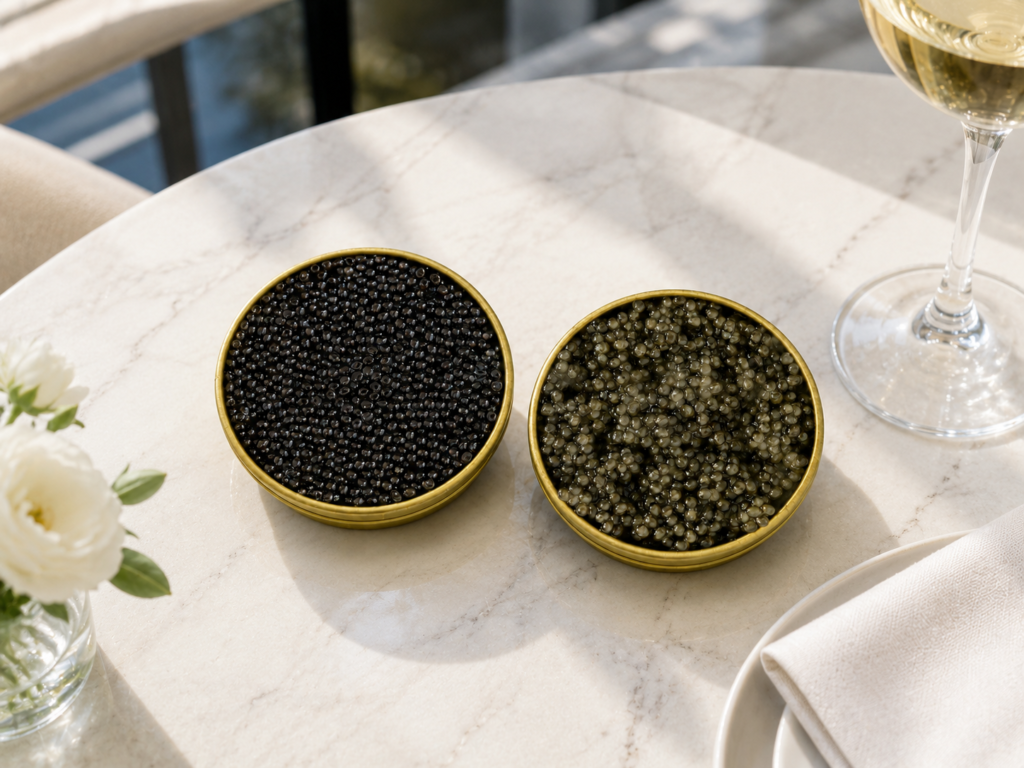

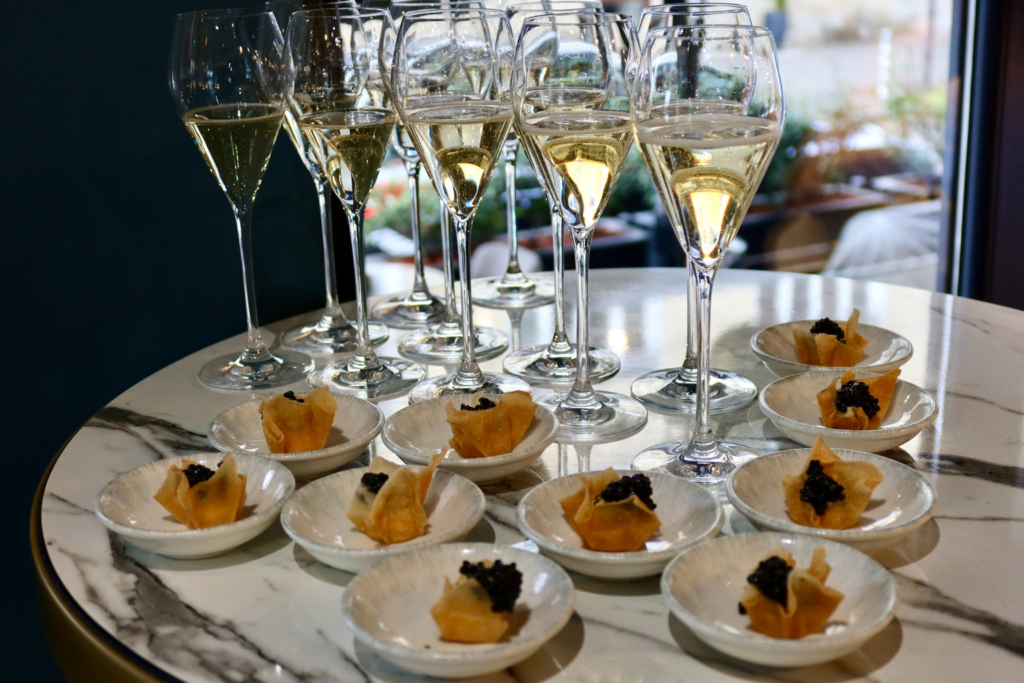
The short answer is: dry white wine with high acidity or brut champagne. Both work for the same reason, and it has nothing to do with how expensive the wine is. It has to do with how little it interferes with the caviar.
‘Pairing’ is a word that sounds more complicated than it is. At its heart lies a single question: which of the two things on the table takes centre stage? With black caviar, the answer is a foregone conclusion. The wine is there to prepare the palate for the next bite, not to compete with it.
That is why the rule that works best is the rule of restraint. Choose a wine that knows when to keep quiet.
Why on earth is wine paired with black caviar?
It’s because of the fat. Caviar is a rich food: the pearls contain natural oils that coat the palate and linger there. After the third or fourth mouthful, the sensation begins to fade and the flavour you’ve paid for becomes increasingly muted.
The acidity in wine does exactly the opposite. It washes away the fat, resets the palate, and the next mouthful feels like the first all over again. The bubbles in sparkling wine also contribute to this effect through their mechanical action.
There is also a second, less obvious reason. Salt and acidity enhance each other’s flavour on the palate. The right wine makes the caviar seem saltier than it actually is, which is precisely why high-quality, lightly salted caviar benefits from the pairing, whilst over-salted caviar does not. The pairing is also a test: a good wine will expose mediocre caviar in an instant.
In other words, the wine doesn’t „complement“ the caviar. It revives it.
What is the best pairing for black caviar?
A dry white wine with pronounced acidity, not aged in new oak barrels, with no sweetness and no high alcohol content.
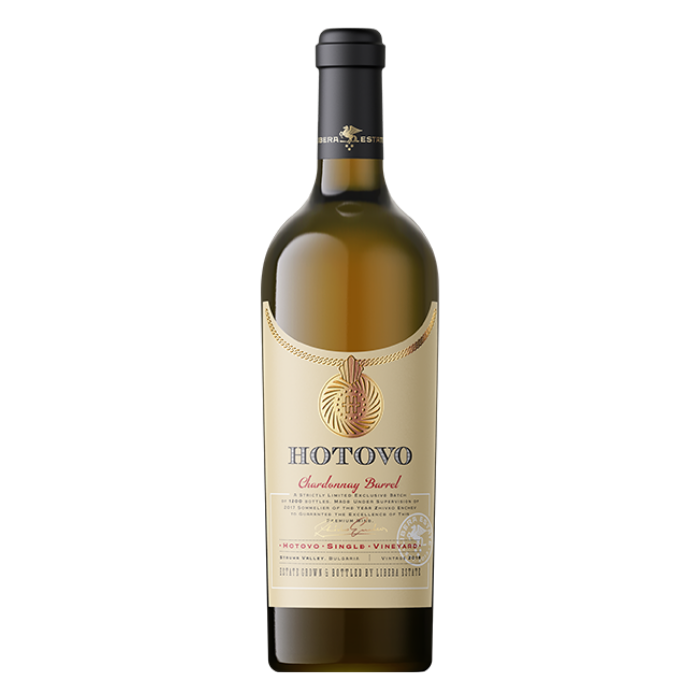
If you’re looking for specific details, at Baerii Gold Æmillius Caviar Our recommendation is Hoto white dry wine. The soft, buttery character of this caviar finds its perfect counterpart in its freshness, which cleanses the palate without diluting the flavour itself.
This is the combination we recommend to someone who’s sitting down with a tin of caviar for the first time and doesn’t want to think too much. It almost always works.
Does champagne go well with black caviar?
Yes, and this is perhaps the most recognisable pairing in the world of gastronomy. But only in a certain sense.
Search gross or extra gross: dry, with low residual sugar. It is the sweetness that spoils the pairing, because the clash between sweet and savoury brings the salt to the fore and makes it harsh. A blanc de blancs, made exclusively from Chardonnay, is a particularly safe choice due to its mineral, clean profile.
Of our sparkling wines, we most often offer De Venoge Princes Blanc des Noirs for those occasions when the occasion calls for champagne, but the caviar calls for restraint.
It’s also worth mentioning why this pair has become so famous. Not because of the luxury, although that does add to the legend. It’s because the bubbles do the same thing to the fat as they do to any heavy meal: they break it down and carry it away. The combination was practical before it became a symbol.
And a practical note about the glass. A narrow flute retains the bubbles for longer, but traps the aroma. A bowl-shaped glass releases them more quickly, but opens up the wine. With caviar, the flute is usually the better choice of the two, because here we’re concerned with the bubbles, not the bouquet.
Which white wine goes best with black caviar?
The profile is more important than the variety. Look for these characteristics:
- High, lively acidity. This is the driving force behind the whole routine.
- Little or no oak. The vanilla and toasted notes from the new cask mask the caviar.
- Dry. Residual sugar and salt do not mix.
- Alcohol in moderation. The high alcohol content burns the palate and masks the subtle nuances.
- Minerality. She prolongs the sequence rather than breaking it off.
Take a look at our selection of white wines with this list in mind, and the choice narrows down quickly.
It is also useful to know the reverse. Fragrant varieties – those with a pronounced perfumed character and floral notes – do not usually pair well with caviar. Not because they are bad wines, but because they are too overpowering. The same applies to anything with a noticeable sweetness, even when the label doesn’t state it. If the wine leaves a cloying sensation on the palate, it will work against you.
Can red wine be drunk with black caviar?
It’s possible, but it’s rarely worth it. The tannins in red wine and the fat in the caviar produces a metallic aftertaste that most people notice straight away but cannot explain.
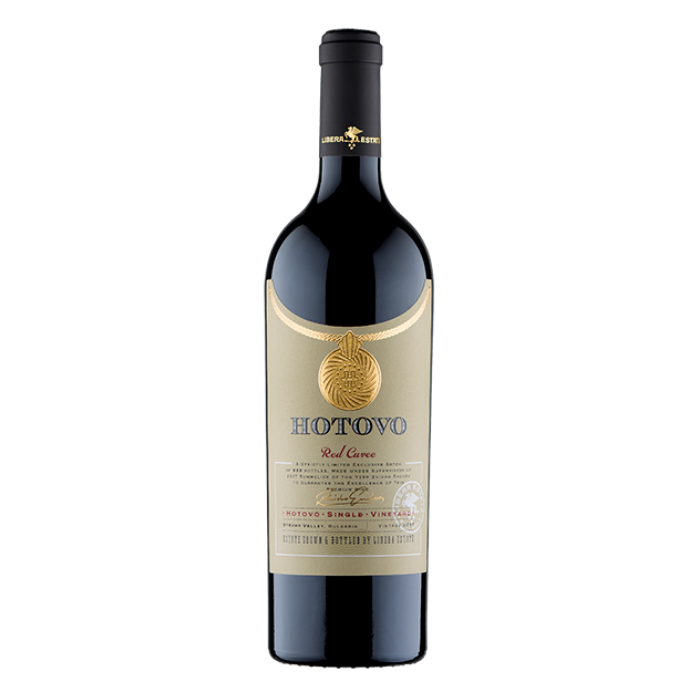
If the evening centres on red wine and the caviar is just the start, choose something light, low in tannins and well chilled. From our range of red wines, we’d suggest something along the lines of Melnik Blend Hotovo for the rest of the menu rather than for the caviar itself.
A word of honest advice: don’t force this combination just to prove a point. We don’t categorise flavours as suitable or unsuitable out of snobbery, but because the palate is what counts.
Why is vodka a classic pairing with black caviar?
Because it does the same job as acidity, just in a different way. Pure, well-chilled vodka It washes away the fat without adding any flavour of its own. Nothing interferes, nothing overpowers.
In the case of Russian sturgeon This is what we prefer: Czechoslovakian vodka, chilled, in a small glass. The scent of the open sea, which sets this caviar apart, remains intact, and the palate remains clean between mouthfuls.
A small detail with great significance: vodka is sipped between mouthfuls, not alongside them. It is a pause, not an accompaniment.
The choice of vodka also matters, albeit less so than with wine. Look for a pure, neutral, unflavoured vodka. Any added flavour, be it fruit or spice, clashes with the caviar. And the temperature here is non-negotiable: vodka that hasn’t just come out of the freezer is simply warm alcohol.
And does tequila go well with caviar?
It is, but in a different vein. Tequila isn’t something you savour; it’s a party ritual.
When the evening is lively, there are plenty of guests and the caviar is being passed round the table rather than staying in front of one person, chilled tequila works in much the same way as vodka: it clears the head, wakes you up and picks up the pace. The difference lies in the intention. Nobody is looking for subtleties at a time like this, and that’s perfectly fine.
Just make sure you know what you’re doing. If you’ve opened beluga and you’ve poured yourself a tequila; you’ve chosen the party over the caviar. Sometimes that’s exactly the right choice.
What do you drink Beluga with?
Beluga is a case where the best advice is to do nothing.
The large pearls and the long, complex aftertaste of this caviar need no accompaniment. Any wine, even a good one, takes something away from the experience. That is why, with Beluga caviar, we recommend enjoying it in its purest form: the caviar on its own, in small bites, savoured slowly, followed by the wine.
If, however, you insist on keeping a glass by your side, let it stay there more often than it’s lifted. A glass of brut champagne, sipped sparingly, won’t do any harm. It simply won’t add anything either.
How do we pair wine with different types of caviar?
The logic is simple: the finer the caviar, the more understated the wine should be.
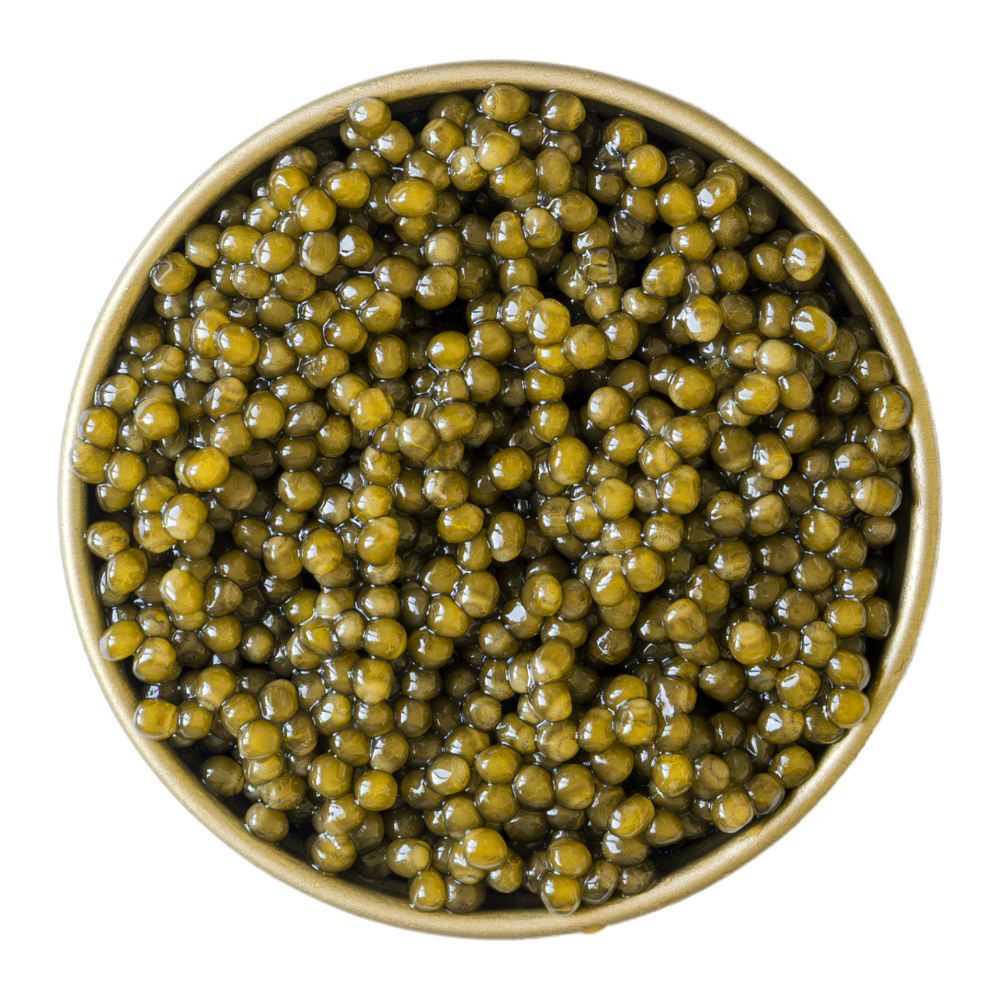
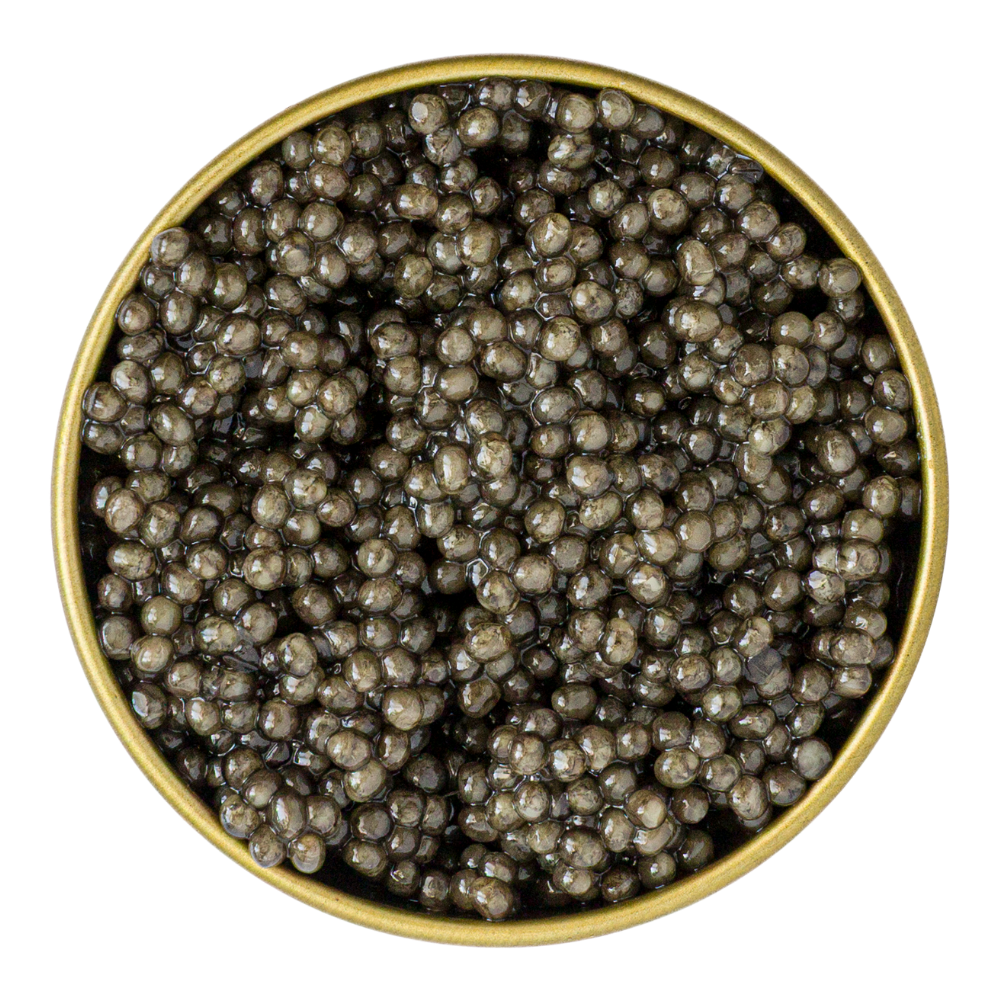
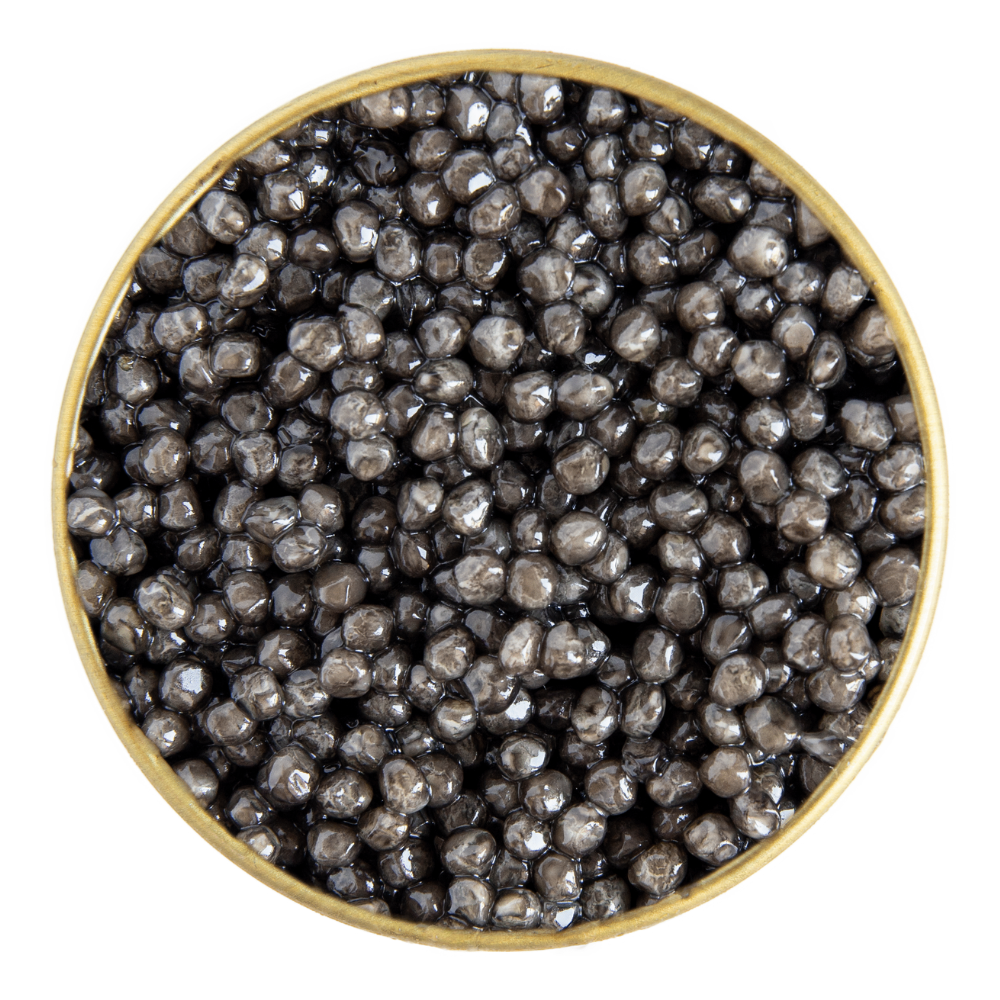
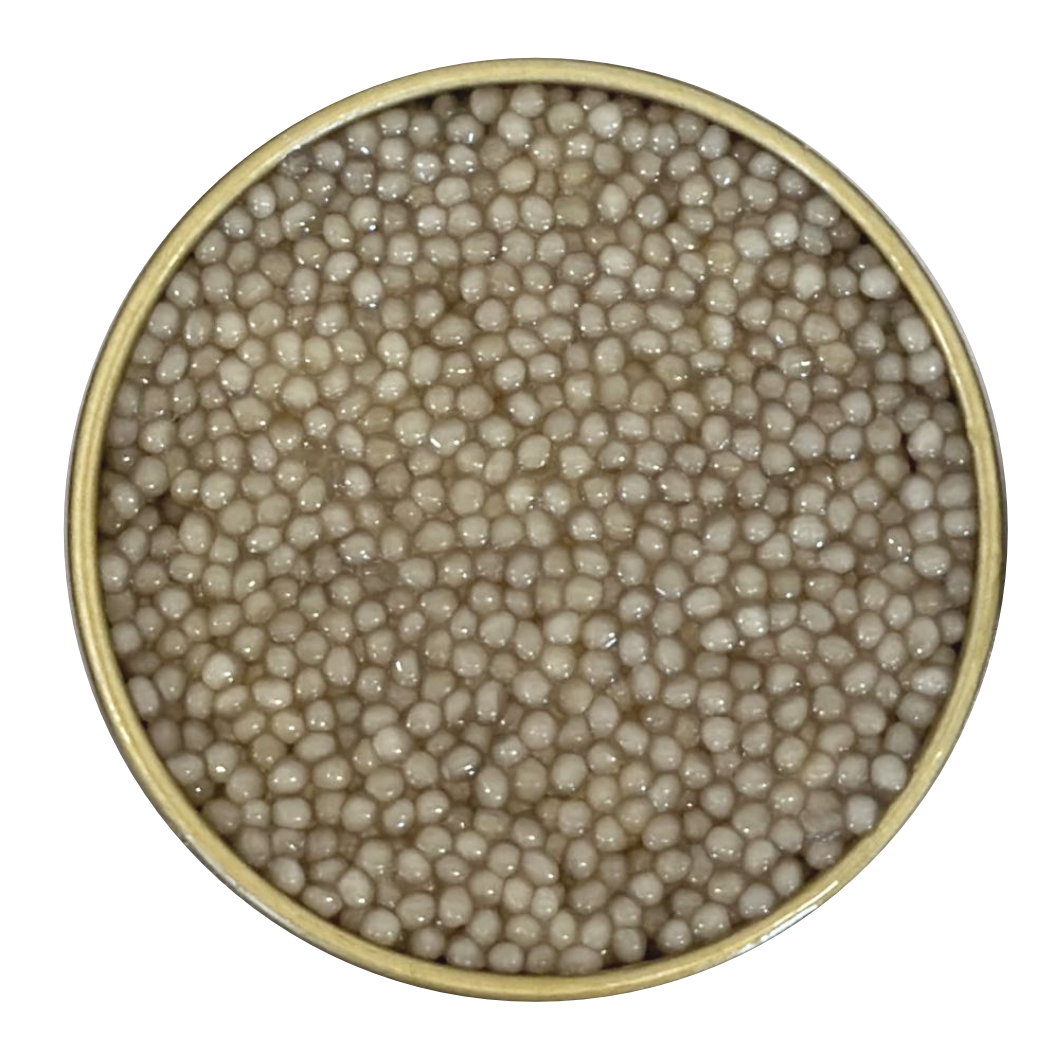
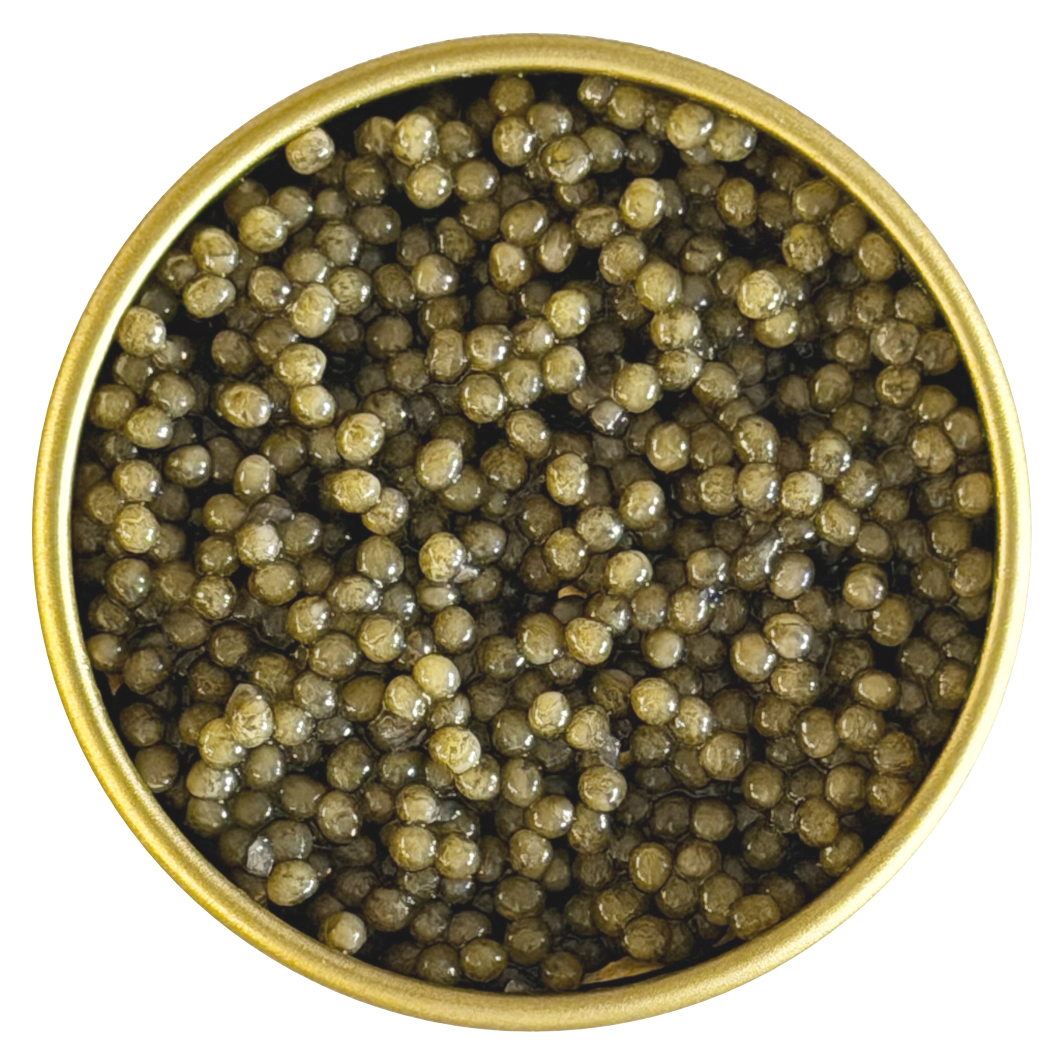
- Siberian sturgeon, Baerii: A soft, buttery flavour. Dry white Hotovo.
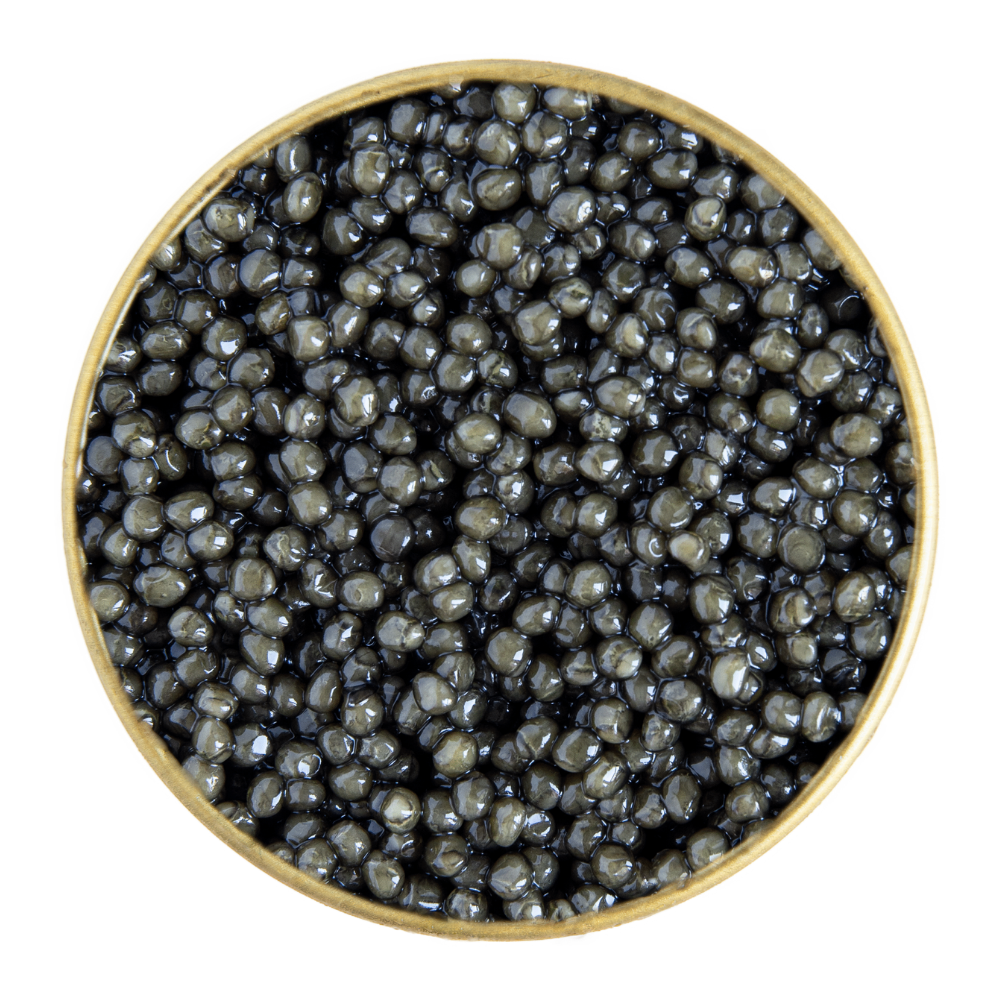
- Russian sturgeon: A whiff of the fresh sea air. Chilled vodka, or a very dry, sparkling white wine.
- Beluga and moruna: plain and simple. If it has to be wine, then brut, and just a little of it.
- Hybrids и albino varieties: Follow the character, not the label. If the fillet is thick, treat it like beluga.
The whole selection of black caviar is organised by type, and if you’re not sure which profile you’re looking at, check the breakdown in the flavour profile of black caviar.
What should those who don’t drink alcohol have to drink?
Lightly carbonated water, well chilled. And that’s not just a compromise answer.
The bubbles do the mechanical part of the champagne’s job; the water doesn’t impart any flavour of its own, and the chill keeps the palate alert. Many tasters switch to water after the third bite precisely because they want to taste the caviar more clearly.
Avoid sweet drinks, fruit juices and anything with a strong flavour. These do not complement the food, but rather mask its taste. If you want something other than water, mineral water with a higher mineral content works better than plain water, as it adds a slight saltiness that complements the caviar rather than clashing with it.
And here’s another observation from our tastings. People who don’t drink often turn out to be the most accurate tasters at the table. Their palates aren’t dulled, and the differences between two types of caviar become apparent to them sooner than to everyone else.
At what temperature should wine be served with caviar?
Chiller than you would normally serve the same wine.
White wine served with caviar is best served at around 8 to 10 °C, champagne at around 6 to 8 °C, and vodka straight from the freezer. The reason is that the cold brings out the acidity and makes it more effective at cleansing the palate.
One word of warning, however: wine that is too cold loses its aroma. If you’ve poured a glass and left it standing for a while, the wine will warm up to the right temperature. Caviar doesn’t have that luxury, which is precisely why it’s the last thing to come out of the fridge.
A practical solution is to have a bucket of ice and water on the table – not just ice. A mixture of ice and water cools more evenly and quickly than dry ice, because the water envelops the whole bottle. Pour small amounts more frequently, rather than filling the glass to the brim: this way, the wine in the glass stays cold throughout, rather than just for the first five minutes.
How much wine goes with a tin of caviar?
Less than you might expect. The trick is to take small sips between mouthfuls, not to drink from full glasses.
One bottle is easily enough for four people and an evening spent enjoying some caviar. If the wine runs out before the caviar, you’ve probably just been drinking the wine rather than pairing it.
That is also the difference between a tasting and a dinner. Both are good, but they are not the same thing.
If the evening centres around caviar, do consider a second bottle of something different. Not so you can drink more, but so you can compare. Two white wines with different acidity levels served from the same bottle reveal more about the pairing than ten articles, including this one. The palate learns quickly when it has something to compare against.
Do pancakes and side dishes influence the choice of wine?
Yes, and more than the caviar itself.
Pancakes, warmed and spread with butter, add richness and warmth. This makes the acidity in the wine all the more essential, meaning the choice shifts slightly further towards dry and fresh wines.
As far as accompaniments are concerned, our stance is well known and we will not waver from it: the finest caviar is best enjoyed on its own. Anything you serve alongside it is something the wine must also cope with. The emptier the plate, the easier it is to choose a wine.
If, however, the dinner includes other dishes, arrange the order so that the caviar comes first. The palate is at its most sensitive at the start, before it has encountered any strong flavours. Make caviar your first bite: this isn’t just for show, but the most practical choice at the table. The wine that follows can then be fuller-bodied, warmer and more complex, as there is nothing left to mask.
What are the most common mistakes when pairing wine with black caviar?
- Sweet wine. Sweet and savoury clash, and the salt wins hands down.
- A heavy oak tree. The vanilla and the toasted flavour completely mask the taste of the caviar.
- High-alcohol wine. It burns the roof of your mouth just when it should be at its most sensitive.
- Served far too hot. It neutralises the acidity, which is the whole point.
- A rather overambitious bottle. A fine wine demands attention. So does caviar. One of them loses out.
- Fragrant varieties. The pronounced fragrance clashes with the briny character of the caviar.
What should we bear in mind about wine and black caviar?
If you have to decide in a minute: dry, white, chilled, no oak. That’s the whole formula, and it’s rarely wrong. If the occasion calls for bubbles, follow the same rule but add the word „brut“ at the start. If the caviar is beluga, save the wine for later. If you don’t drink, pour yourself a glass of cold sparkling water and don’t apologise to anyone.
Wine is not a companion to caviar. It is a pause between two mouthfuls, designed to ensure that the second is just as good as the first. Everything else follows from that: dry, tart, chilled, still.
The rest is a matter of preference, and preference is developed through experience. We can tell you what works. You’ll discover for yourselves what you like, and that’s the most interesting part.
If you want to put the theory to the test, the quickest way is via one tasting, where the combinations follow one after the other and the difference is immediately audible.
And if you’ve got a tin of caviar and a bottle you’re not sure about this evening: open the bottle, try it on its own, then pop a pearl in your mouth. Your palate will tell you the answer faster than any article. Will you give it a go?